The NATO nuclear sharing agreement between European nations is to make sure that if nuclear deterrence ever has to be credible, it actually is.
The US keeps around 100 upgraded B61-12 nuclear bombs at six air bases across five European countries.
Those countries keep certified aircraft and trained pilots ready to deliver them, but only if the US President and NATO’s political leadership authorize it.
But right now, in 2026, this framework is more active and more contested than at any point since the Cold War.
Russia has nuclear weapons in Belarus and France just announced a new nuclear doctrine in March 2026.
Poland and Finland are also pushing to join the arrangement.
And the US is reportedly in quiet talks to add new host countries for the first time in decades.
Where the US Nuclear Weapons Are in Europe

The US completed the full deployment of its modernized B61-12 bombs across Europe in January 2025.
These replaced older B61 variants and came with a yield range of 0.3 to 50 kilotons, which gives planners a lot of options between “do nothing” and a full strategic nuclear strike.
According to the Federation of American Scientists and the Bulletin of the Atomic Scientists, around 100 to 120 B61 bombs are currently deployed at six or seven bases across five or six countries:
- Buchel Air Base, Germany (10 to 15 bombs)
- Kleine Brogel Air Base, Belgium (10 to 15 bombs)
- Volkel Air Base, Netherlands (10 to 15 bombs)
- Ghedi Air Base, Italy (10 to 15 bombs)
- Aviano Air Base, Italy, 20 to 30 bombs
- Incirlik Air Base, Turkey, 20 to 30 bombs
And possibly the UK is being added, because Reports have surfaced that Lakenheath Air Base in England has been building nuclear weapon storage infrastructure, where US bombs were previously stationed until 2008.
How the Sharing Agreement Works
1: The US owns the weapons, always
NATO is clear on this, the sharing is about the deterrence mission and decision-making, not the weapons themselves, and the US owns the B61-12s at all times.
Germany, Belgium, the Netherlands, and Italy provide the aircraft, the pilots, and the infrastructure.
But the bombs never leave US custody in peacetime.
2: Only the US President can authorize a strike
Even if NATO’s political leadership approves a nuclear mission, the actual authorization still requires the US President specifically.
A nuclear mission can only be undertaken after explicit political approval is given by NATO’s Nuclear Planning Group and authorization is received from the US President.
So German or Belgian pilots train for nuclear delivery missions, but those missions happen only if Washington says yes.
3: All allies have a voice through the Nuclear Planning Group
The NPG was established in December 1966 and is where all 32 NATO allies except France sit together and consult on nuclear policy, all decisions are made by consensus.
Countries that don’t host any weapons, like Estonia or Norway, still have a voice in nuclear policy through the NPG.
That’s the political point of the whole arrangement.
4: The delivery aircraft have to be specifically certified
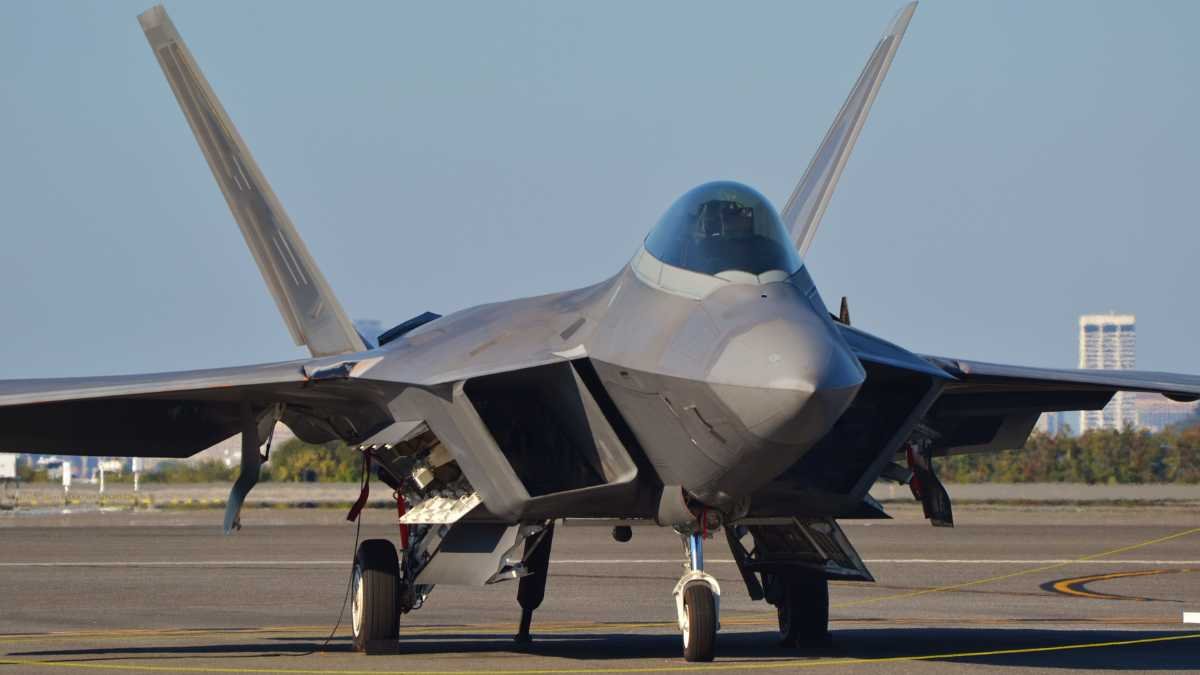
The physical delivery system is called “dual-capable aircraft,” or DCA, meaning jets certified to carry the B61-12.
Right now, the F-35A is the primary platform across most of the sharing countries.
Germany is in mid-transition from the aging Tornado to the F-35A, Belgium and the Netherlands have already switched.
And Turkey is the outlier, still using older platforms.
Germany’s Role, and Why It Matters More Than Most Countries
Germany stores roughly 20 US B61-12 bombs at Büchel Air Base, home of the 31st Fighter-Bomber Squadron.
The planes carrying them were the Tornado, a jet from the 1970s that was getting genuinely too old to fly nuclear missions reliably.
Germany ordered 35 F-35As in December 2023 for $8.4 billion to replace the Tornado fleet, with deliveries starting in 2026.
In late 2025, the defense minister pushed to expand that order to 50 aircraft.
The F-35A is the only currently certified DCA for the B61-12, and no European alternative qualifies without years of expensive certification work.
One thing that makes this politically important is the history.
In 2009, Germany’s coalition agreement explicitly called for removing the US nuclear weapons from German soil.
But now the position has been completely reversed, Germany’s 2022 Zeitenwende strategic shift, triggered by Russia’s invasion of Ukraine, turned Berlin from the most reluctant nuclear host into one actively investing in the mission.
Poland, Finland, and the Push to Expand the Arrangement
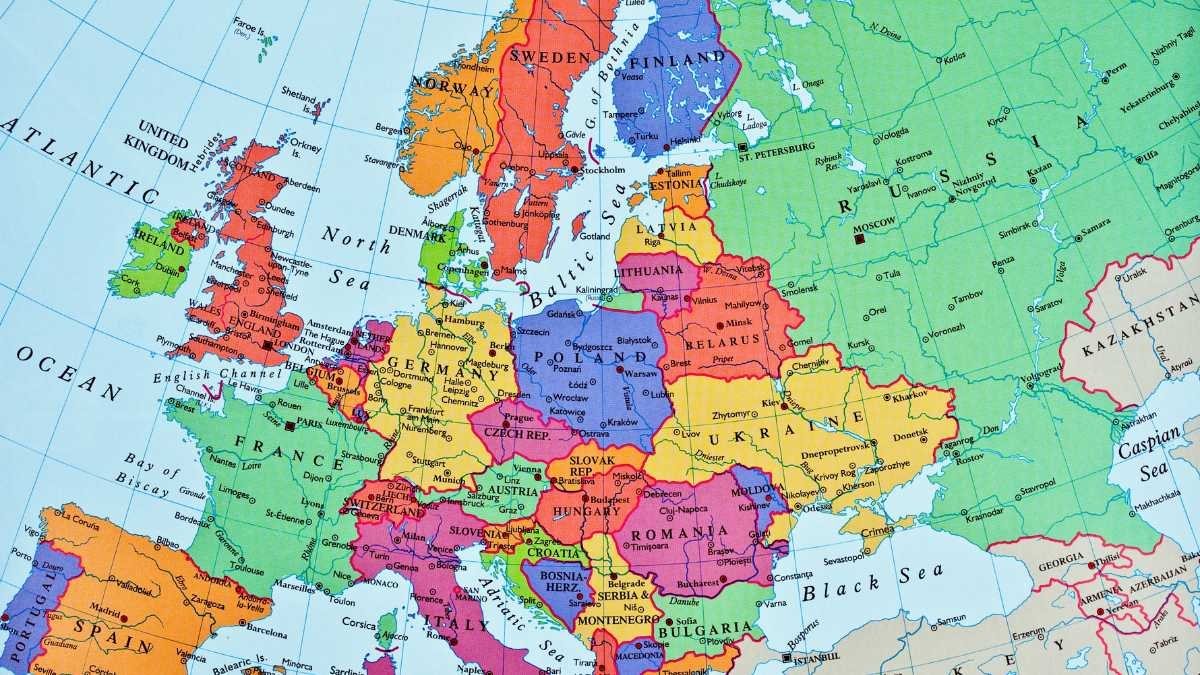
This is where the situation in June 2026 is genuinely new territory.
Poland’s Long Push
Poland plays an important role in NATO and in future I’ll be even bigger, and since 2014 Poland has been raising its hand for nuclear sharing.
But it went from background noise to front-page in June 2023, when Prime Minister Mateusz Morawiecki publicly declared Poland’s interest in hosting weapons.
Russia deploying nuclear weapons to Belarus, right on Poland’s border, pushed urgency to a new level.
In February 2026, Polish President Karol Nawrocki expressed support for bolstering Poland’s security “even on a base of a nuclear potential.”
And on June 3, 2026, Poland’s Defense Minister confirmed live NATO-level talks on expanding nuclear sharing, with a NATO defense ministers’ meeting on the topic scheduled for June 18, 2026.
Besides this, Poland is already buying 32 F-35As, a fleet that could be certified for nuclear delivery without stationing weapons there in peacetime.
Finland’s Legal Move
On March 5, 2026, the Finnish government announced plans to amend its 1987 Nuclear Energy Act, which currently bans nuclear weapons on Finnish soil.
Defense Minister Antti Häkkänen said the change was needed for Finland to fully exercise its role inside NATO’s deterrence system.
Finland joined NATO in April 2023, and now it’s also ordering F-35As, and top of that, changing the legal framework now is a deliberate signal.
The US Is Reportedly Considering It
According to the Financial Times on June 2, 2026, Washington is in confidential talks about adding countries to the nuclear-sharing arrangement, with Poland and the Baltic states being specifically mentioned.
This would be the first expansion of the physical footprint of US nuclear forward deployment in Europe since the Cold War ended.
France’s Separate Layer and Forward Deterrence

France has always stayed outside NATO’s nuclear sharing framework.
It left NATO’s integrated command in 1966 under de Gaulle and only rejoined the military structure in 2009, but still opted out of the NPG.
So, France’s nuclear weapons are entirely its own.
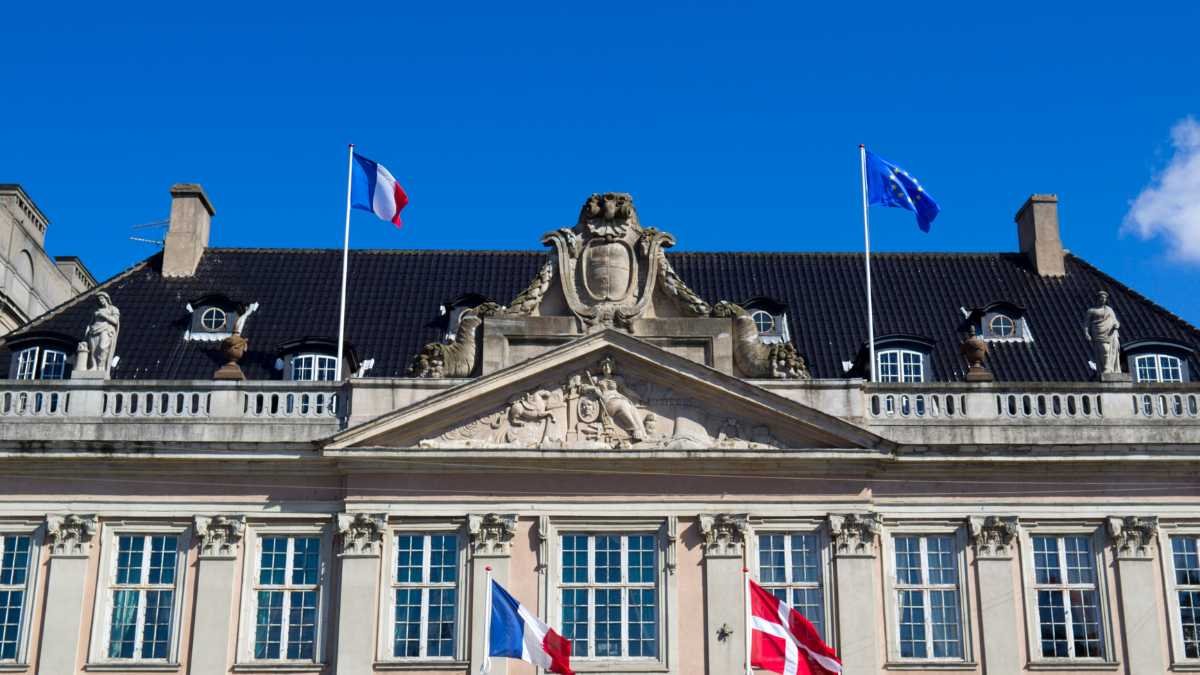
But in March 2026, something shifted, on March 2, Macron stood in front of a nuclear submarine at the Île-Longue base and announced two things: the first increase in French nuclear warheads since 1992, and a new concept called “dissuasion avancee,” which translates to forward deterrence.
Under this framework, eight European countries have already agreed to participate:
- Germany
- Poland
- Netherlands
- Belgium
- Greece
- Sweden
- Denmark,
- UK.
These countries won’t host French nuclear weapons in peacetime, but they’d participate in French nuclear exercises and could host French strategic aircraft during a crisis.
But there is also some limit, Macron was explicit: France keeps sole authority over the nuclear trigger, so there is no automatic guarantee or formal commitment to protect a partner.
It’s more like: “Our nuclear-armed jets may operate from your territory, which complicates what an adversary has to calculate.”
It’s meaningful, but still not the same as the US umbrella.
Also in July 2025, the UK and France signed the Northwood Declaration, committing to coordinate nuclear policy, capabilities, and operations.
It is the most extensive UK-France nuclear cooperation agreement ever signed, this gives London a role as a bridge between Washington and Paris in Western nuclear deterrence.
Can These Weapons Realistically Be Used?
The weapons exist so that nobody has to find out.
And there is a strategic logic and it’s not “we’ll use them if attacked.”
It’s that deploying weapons, certifying aircraft, running annual exercises like Steadfast Noon and all of that sends a continuous signal that removes the option of an adversary calculating that escalation is free.
The existence of 100 or more B61-12s in Europe, on flight-ready aircraft, means that any attack on a NATO ally has a nuclear dimension baked into the response calculus from the start.
Actual use threshold is deliberately left vague, NATO has never defined what specific scenario triggers nuclear use, and that ambiguity is intentional.
What is not ambiguous is the chain of control: the US President has to authorize any strike, even a fully approved NATO decision does not bypass that.
Which Countries Are Covered and Which Ones Are Not
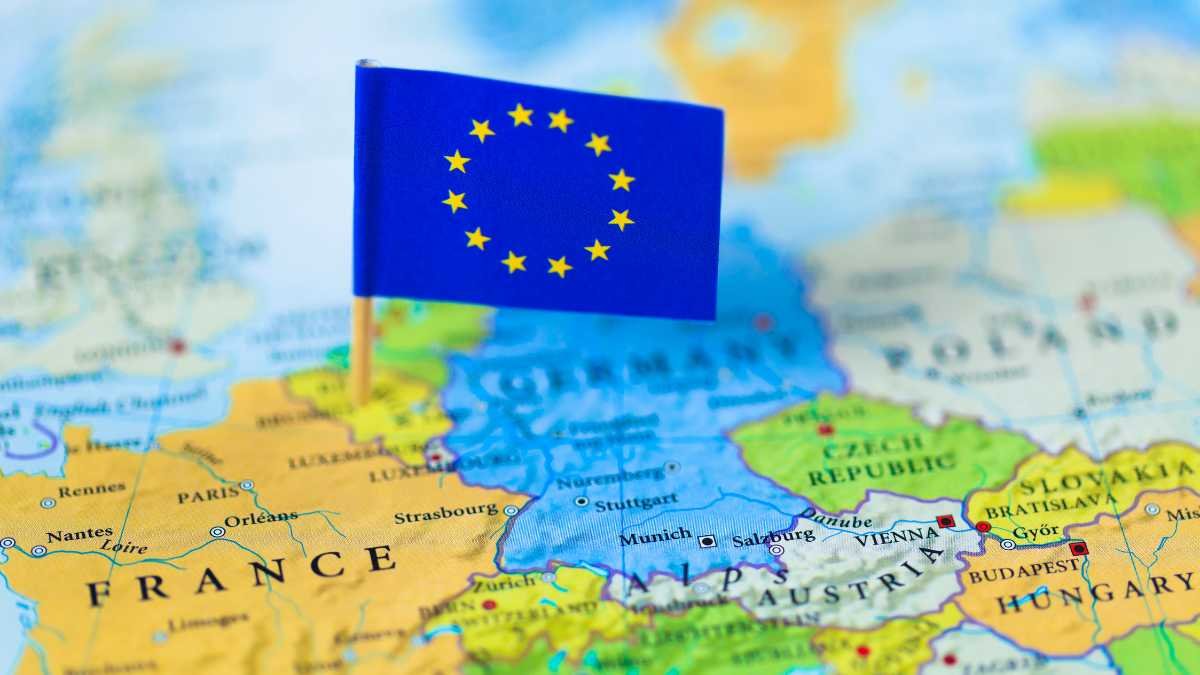
All 32 NATO members are covered by the nuclear umbrella in principle, and Article 5 of NATO applies to everyone.
But the hands-on nuclear sharing arrangement is narrower.
Countries that host US nuclear weapons: Germany, Belgium, Netherlands, Italy, Turkey.
Countries with independent nuclear arsenals: the US, UK, France.
Countries covered by the umbrella but with no weapons on the ground: Poland, Romania, the Baltic states, Norway, Denmark, and the newer members like Finland and Sweden.
So gap is exactly what Poland and Finland are trying to close, at least by getting their F-35s certified for nuclear delivery missions even before any weapons are stationed there.
Hosting weapons in peacetime is one option; qualifying aircraft for the mission without hosting is another.
Both are being discussed inside NATO right now.
FAQs
Does Turkey still host US nuclear bombs despite all the friction with NATO?
Yes, it does, Incirlik Air Base holds 20 to 30 B61-12 bombs, making it one of the larger hosting sites in Europe.
Turkey’s complicated relationship with NATO, the S-400 purchase from Russia, blocking Sweden’s membership for nearly two years, has led to debate inside the alliance about whether Incirlik is politically sustainable long term.
But as of 2026, the weapons are still there, and no public change has been announced.
Does hosting US nuclear weapons violate the Non-Proliferation Treaty?
It’s genuinely contested, NATO’s legal argument is that the weapons stay under US ownership and control at all times, so no “transfer” technically happens and the NPT’s Article I is not violated.
A 2025 Stanford Law Journal analysis concluded the arrangement is legally compatible with the NPT on these grounds, while Critics, including ICAN, disagree.
This argument has been running since the 1960s and isn’t likely to be resolved.
If Poland hosts weapons, wouldn’t that seriously escalate things with Russia?
Russia would call it escalation, and has already condemned the discussion of it, but from NATO’s perspective, Russia deploying nuclear weapons to Belarus in 2022 is what created the asymmetry.
Poland shares a border with Belarus, Kaliningrad, and Ukraine.
The counterargument inside NATO is that putting nuclear capability closer to the threat is not escalation, it’s re-establishing deterrence balance.
What is Steadfast Noon and what happens during it?
Steadfast Noon is NATO’s annual nuclear deterrence exercise, typically held each October.
Dual-capable aircraft from multiple countries practice actual nuclear delivery missions with simulated or unarmed weapons.
B-52s fly in from the US, and countries that don’t host weapons but participate in a support role are called “contributor nations.”
The whole point is to make the capability visible and verifiable, both to NATO allies and to adversaries.
It’s deterrence in the most practical sense: demonstrating that the mission is real and practiced.
France is building its own European nuclear framework so Does that replace NATO’s sharing arrangement?
No, and Macron was careful to say the two are complementary, and NATO’s nuclear sharing is US-centered and operates through the NPG.
France’s forward deterrence is a parallel layer, France keeps full control, there’s no binding commitment to partners, and it works on a different political track.
What’s happening is that Europe is building redundancy into its nuclear deterrence setup, because depending entirely on Washington has started to feel risky in a way it didn’t ten years ago.
Conclusion
The NATO nuclear sharing policy has been functionally stable for about 30 years, and mechanism is still same changed, but what has changed is everything around it.
For example, there is B61-12 deployment in early 2025 modernized the arsenal, Germany’s F-35 transition through 2026 to 2029 is modernizing the delivery capability.
Poland and Finland are signaling they want in, and the France launched a parallel nuclear framework that eight countries have already joined.
The US is reportedly willing, for the first time in decades, to discuss expanding the arrangement eastward.
All this is happening because Russia put nuclear weapons in Belarus, and because Europe no longer assumes the US commitment is unconditional, and because the calculation of deterrence in Europe has genuinely shifted.
So this sharing agreement is designed to spread responsibility so deterrence is credible.

Abraham is the founder and sole writer of Geopolitics Decoded. Based in New Delhi, India, he has been researching and analyzing international affairs since 2019, with a focus on great-power competition, European security, energy geopolitics, and global diplomacy. He is currently pursuing independent coursework in global diplomacy through SOAS University of London. His fact-based, deeply contextual analysis has earned millions of interactions across social media platforms, including Threads and Instagram. Every article on this site is independently researched, written, and verified by Abraham personally. Read Abraham’s full author bio