
Buffer states are smaller, usually weaker countries between two rival powers, and they keep those rivals from sharing a direct border and, or we can say, it reduces the chance of direct conflict between them.
But some of these countries turned that position into leverage, and they attract infrastructure investment, economic deals, and diplomatic relevance far beyond what their size would normally get them.
On the other hand, a few states also get crushed. And right now in 2026, several countries are living like buffer states.
Here are the 7 Buffer States examples, from history to today.
Afghanistan is the Country That Broke Every Empire That Tried to Use It
If you want to understand what buffer state failure looks like at its worst, Afghanistan is the best example historically.
How the British and Russians Turned It Into a Pawn
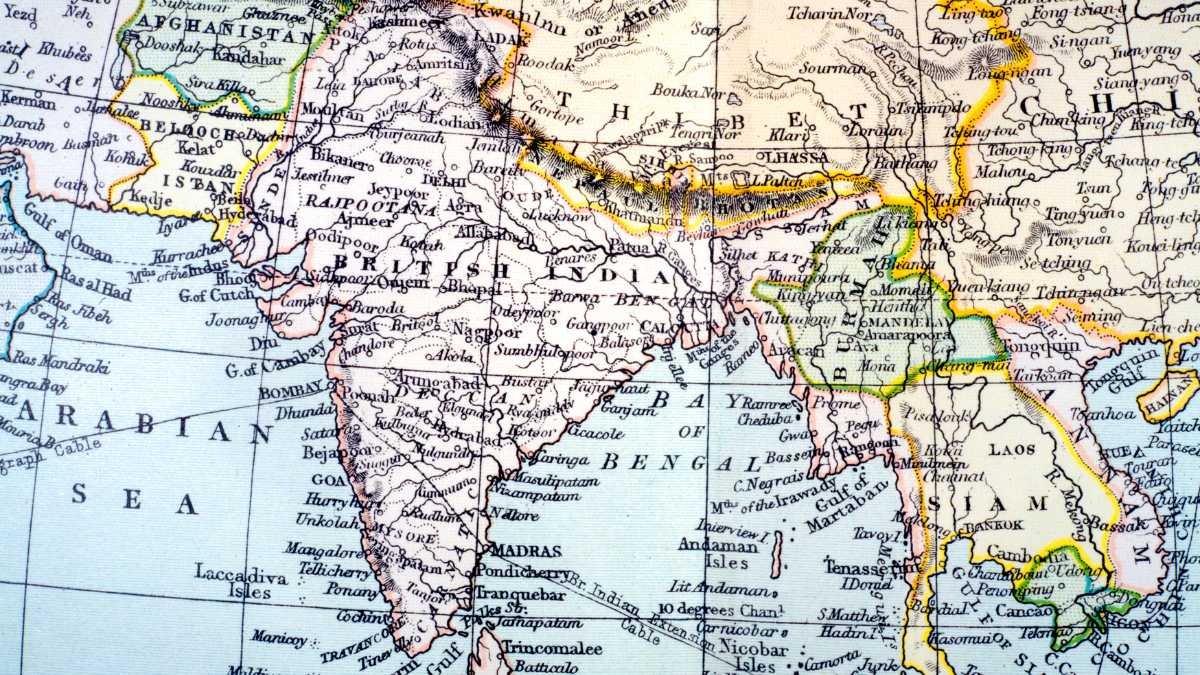
In the 19th century, Britain and USSR or modern day Russia, were expanding toward each other across Central Asia, which is also known as the Great Game.
Russia was pushing south toward British India, while Britain needed a cushion. And Afghanistan sat exactly in between.
In 1839, Britain invaded to install a friendly ruler, but that wasn’t easy, and it became one of the worst military disasters in British history.
Around 16,000 troops and civilians who retreated from Kabul in January 1842, only one man, Dr. William Brydon, reached safety alive.
They tried again to conquer Afghanistan but failed again.
However, later they installed Abdur Rahman Khan and formally made Afghanistan a buffer between British India and Russian Central Asia.
The 1907 Anglo-Russian Convention sealed it, and Afghanistan’s borders were drawn by two empires that needed space between them, and that’s how Afghanistan became a buffer state in history.
Why the Buffer Status Never Saved It
Afghanistan stayed neutral through WWII and non-aligned through the early Cold War, with both the US and USSR competing to fund its roads and infrastructure instead of fighting over it.
That actually worked for a while, but then in 1979, the Soviet Union invaded, and the buffer collapsed completely.
Afghanistan became a proxy battlefield; the USSR had to leave it, and then the US came after 2001.
As one analysis put it, Afghanistan bore the consequences of other powers’ fears, again and again, from the British in the 19th century to the Americans in the 21st.
Some analysts even say, including myself, that Afghanistan is geography as a curse rather than leverage.
Finland: How a Small Country Survived Between Two Blocs Without Being Swallowed
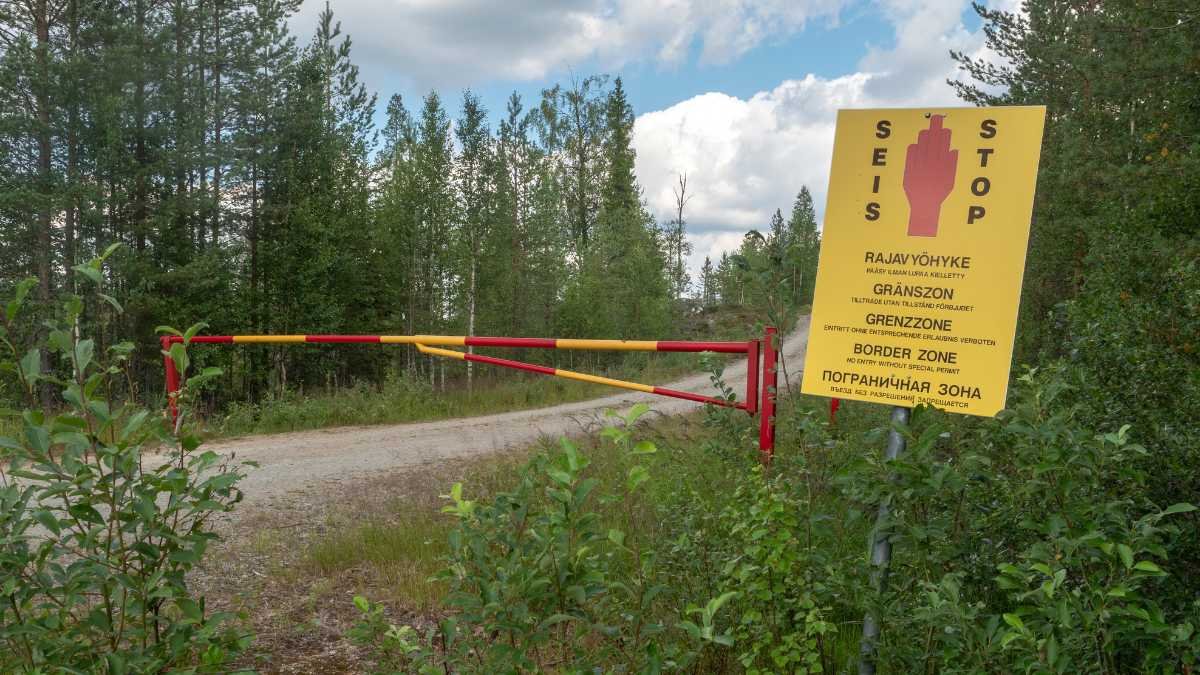
Finland is the example that every serious student of small-state survival wants to study.
Strategy That Kept Finland Free During the Cold War
Finland lost territory to the Soviet Union in the 1939-1940 Winter War and again in the 1941-1944 Continuation War.
After 1945, it was in a difficult spot: a long border with the USSR, clearly a Western democracy, but not absorbed into the Soviet bloc like Poland, which is now part of NATO or Hungary.
That development is also known as Finlandization; Finnish historians describe it as a success because Finland kept its independence and democratic system even while sitting in the Soviet sphere.
The 1948 Treaty of Friendship with the USSR set the formal terms, in that Finland avoided any move Moscow could read as threatening.
Active neutrality let Finland’s economy trade with both the Soviet bloc and Western Europe at the same time, so it had stability and growth that countries like Czechoslovakia or Hungary, fully absorbed, never had.
However, all that wasn’t cost-free.
President Kekkonen’s 26-year rule used the neutrality doctrine to silence domestic opposition, which hurt Finnish democracy internally.
But compared to what happened behind the Iron Curtain, Finland kept its sovereignty, an economy, and a functioning democratic system.
Why Finland Eventually Left That Role
Finland held its neutrality line for over 40 years with consistency; it never gave Moscow a reason to act, never becoming Moscow’s puppet.
This balance was harder to maintain than it sounds, but Finland managed it.
In April 2023, Finland joined NATO, and it tells us: the Finlandization strategy was a Cold War answer to a Cold War problem.
Once Russia invaded Ukraine in 2022, Finland changed its position.
Ukraine: What Happens When Nobody Agrees on What the Buffer Is For

Ukraine is the most consequential buffer state story of our time, and the most tragic.
Before 2014, Ukraine was a contested zone where Russia and NATO competed for influence through local proxies on roughly equal terms, like a fragile but functional buffer.
But the 2014 Maidan Revolution tilted Ukraine decisively toward the West.
And Russia responded by annexing Crimea and backing separatists in Donbas, and then in 2022, Russia began the full-scale invasion.
After Crimea in 2014, scholars like Kissinger and Mearsheimer argued that turning Ukraine into a neutral buffer was the right move and that pushing NATO membership would be a miscalculation.
Btw, Ukraine wasn’t that weak. In 1994, Ukraine signed the Budapest Memorandum, giving up its nuclear weapons in exchange for sovereignty guarantees from the US, UK, and Russia.
Ukraine held its end and paid the price; that is the lesson of buffer state diplomacy: guarantees without enforcement are just words on paper.
As of 2026, Ukraine has applied for NATO membership and EU candidacy, but it’s in a conflict, so we are not sure if it will end up as a secured NATO member or a frozen buffer-like arrangement.
Mongolia: A Buffer State Example That is Still Balancing in Real Time

Mongolia shares 3,485 km of border with Russia and 4,710 km with China, and has a population of about 3.3 million; it has been playing this balancing act for over a century and is still at it today.
The Third Neighbor Idea and Its Limits
Mongolia’s strategy for decades was called the “Third Neighbor” policy: if you’re locked between two giants, build real relationships with other powers to gain leverage.
It built partnerships with Russia, Japan, China, and the US at various points.
China takes around 91% of Mongolian exports, and Russia supplies over 90% of Mongolia’s petroleum.
That’s near-total dependency on the two neighbors you’re trying to hold at arm’s length.
What Shifted in 2025-2026?
In September 2025, Mongolia moved toward full SCO membership, joining China and Russia’s security architecture, and both Putin and Xi praised the move.
Mongolia pledged to join joint anti-terror drills in 2026 and agreed to host a section of the Power of Siberia 2 gas pipeline.
At the same time, Japan’s Emperor visited Ulaanbaatar in July 2025, in what Russian analysts described as an attempt to pull Mongolia’s economic ties away from Beijing and Moscow.
And youth protests in June 2025 brought down the existing government, narrowing Mongolia’s political options further.
Mongolia hasn’t been crushed, but the Neighbor idea is under more stress than it’s been in years.
It’s a live case study in what happens when both neighbors get more assertive at the same time.
Nepal: Squeezed Between India and China, With No Easy Way Out
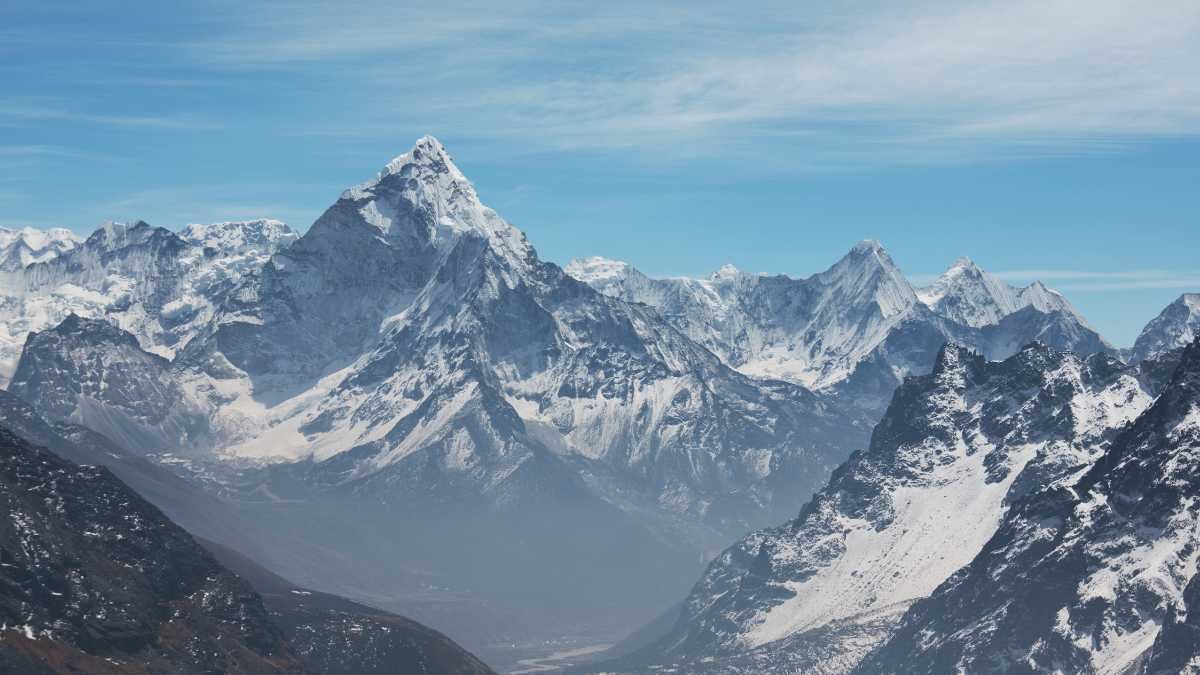
Nepal is one of the clearest current buffer state examples that most people outside South Asia don’t pay enough attention to.
Nepal shares borders with India on three sides and a 1,389 km border with China’s Tibet Autonomous Region to the north.
For India, Nepal directly touches five states, including Uttarakhand and Bihar, and is tied to its northern frontier security.
For China, Nepal is access to South Asia and a check on Indian influence near Tibet.
Nepal’s formal answer to all this: non-alignment.
It declared itself a Zone of Peace and has consistently refused military alliances.
In 2025, former Foreign Minister Saud stated that Nepal will never join any military alliance or security pact.
China has pushed BRI projects since 2013, and India also maintains open borders and cultural ties.
Besides this, the US put in $500 million through its Millennium Challenge Corporation, which Beijing read as a strategic foothold.
Domestic instability makes everything harder
No Nepali government has completed a full five-year term in decades, Youth-led protests in 2025 ended the existing political order, and in March 2026 the Rastriya Swatantra Party won a landslide election, with former Kathmandu mayor Balendra Shah becoming one of the world’s youngest heads of government.
How this new leadership navigates the India-China balance is unknown.
The territorial disputes are unresolved too; India published a map in 2019 showing Kalapani and Lipulekh within its borders.
Nepal amended its own constitution in 2020 to formally claim those territories, and it still lives in 2026.
Moldova and Georgia: Same Pressure from Russia, Completely Different Outcomes
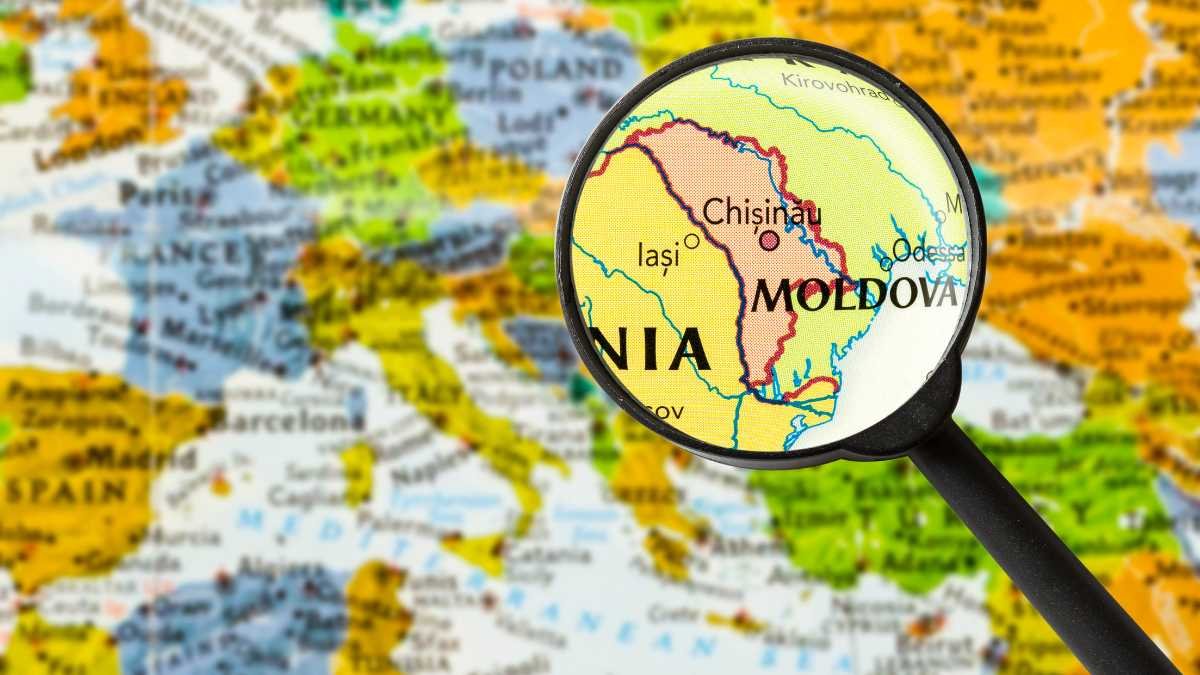
Both countries sit between Russia and the EU, and they faced heavy Russian interference; their stories in 2025-2026 look completely different.
Moldova: Slowly Cutting Itself Free
Moldova has been deliberate about reducing Russian leverage; Russia’s trade share dropped from over 25% in 2000 to just 2.5% by 2024, and it seems it was intentional.
In the 2025 parliamentary elections, Russia ran disinformation campaigns and vote-buying operations.
Sandu’s pro-European party still won with over 50% of the vote.
In October 2025, Moldova adopted a national military strategy that identified Russia as its main threat and pledged to rearm to NATO standards.
The EU has mobilized over €2.2 billion in support since 2021, with another €1.9 billion facility approved for 2025-2027.
Moldova shows that a buffer state can choose a direction but only if external backing is strong enough to make that choice survivable.
Georgia: The Buffer That Got Pulled Back In
Georgia moved the other way. Its EU candidacy was frozen after the government pushed foreign agent legislation that Brussels compared to Russian-style media control.
The pro-Western president was sidelined by a parliamentary majority aligned with Moscow.
Russia still occupies South Ossetia and Abkhazia, breakaway regions inside Georgian borders since 2008.
The Moldova-Georgia in 2025-2026 is one of the cleanest real-world tests you’ll find.
Same regional pressure, very different outcomes.
It came down to three things: which way the government was pointing, whether that matched what the population actually wanted, and whether the West committed enough to back it up.
What Actually Decides Whether a Buffer State Makes It
Looking across these 7 cases, we can notice a few things.
Consistency over time matters more than anything; Finland held its neutrality for over 40 years without lurching.
The buffer states that failed often made a sudden move toward one rival, which triggered the other.
That doesn’t mean Ukraine caused its own invasion; it didn’t, but the speed and completeness of its post-2014 realignment removed any ambiguity the other side might have used to justify patience.
Geography helps when it makes invasion painful
Nepal has the Himalayas, and Afghanistan’s mountains defeated every empire that tried to fully control it.
Mongolia’s vast terrain makes large-scale occupation unattractive.
So when the landscape itself is a deterrent, it buys the smaller country time.
Economic diversification
Mongolia’s 91% export dependency is on China, and it’s a real vulnerability.
Finland’s Cold War strategy of trading with both blocs gave it leverage too.
Buffer states with economic ties spread across multiple powers are much harder to pressure.
Internal stability determines how much room to manoeuvre a country actually has
Nepal’s chronic government turnover has consistently narrowed its options.
In 2025, because of a Mongolian political crisis, some important infrastructure decisions were delayed.
A buffer state that can’t govern itself consistently is much easier to manipulate from outside.
And then there’s what no small country can fully control: what the great powers decide to do.
Ukraine is the reminder that careful positioning doesn’t guarantee safety when one of the larger powers decides the arrangement no longer serves its interests.
Conclusion
Buffer states such as Mongolia, Nepal, Moldova, Georgia, etc, are navigating pressure in 2026.
The mechanics are still the same from the Great Game: a smaller country sits between two rivals, and both want influence over it.
The country tries to extract value from that position without becoming a casualty of it.
History is honest about the odds: most buffer states are more likely to be occupied than comparable countries.
But the ones that survived long-term share a common thread:
- They understood their position clearly
- Held a consistent line, and turned geography into leverage.
The ones that got crushed were:
- Where external pressure became too intense
- Internal governance was too weak to hold a line
- Or both at once.
Geography cannot be changed, and the rivalries keep shifting, so the countries in between have to figure out how to survive both.
FAQs
Is Pakistan a buffer state?
Not at all, if we speak in the traditional sense, because Pakistan has nuclear weapons and it has one of the strongest militaries in the world, so Pakistan doesn’t fit the small-and-weak profile.
However, Pakistan has sought great power patronage historically: it was aligned with the US during the Cold War and War on Terror, and now with China through CPEC.
After the India-Pakistan conflict in May 2025, Pakistan moved closer to both the US and China.
In April 2026, Pakistan was brokering US-Iran peace talks in Islamabad, which is something a passive buffer would never be in a position to do
So, it’s less a buffer and more an active player trying to maximize its value between competing powers.
Can a buffer state ever exit that role?
Yes, and Finland is the best example. It managed its position between NATO and the Soviet sphere for over 40 years.
After Russia invaded Ukraine in 2022, Helsinki reassessed and joined NATO in April 2023.
The buffer arrangement worked while the external conditions supported it.
When those changed, Finland changed too. Buffer status is not permanent; it’s a strategy that fits specific conditions.
What’s the difference between a buffer state and a neutral state?
A neutral state like Switzerland chooses neutrality as deliberate policy and is recognized as such by surrounding powers.
A buffer state exists primarily in relation to two rival powers on either side of it.
Finland during the Cold War was closer to a buffer, with neutrality policies layered on top.
Switzerland is genuinely neutral and happens not to be sitting between active rivals.
So, the main difference: neutral status is more self-determined, while Buffer state status is largely defined by the rivalry around you.
And most buffer states don’t get to choose whether that’s what they are.
What is the buffer state between India and China?
Nepal! It shares a 1,389 km border with China’s Tibet Autonomous Region to the north and is bordered by India on three sides.
Both powers treat it as strategically critical, and Nepal has spent decades trying to keep both at arm’s length while extracting economic benefits from each.
With the new government that took office in March 2026, how Nepal manages that balance going forward is an interesting thing.

Abraham is the founder and sole writer of Geopolitics Decoded. Based in New Delhi, India, he has been researching and analyzing international affairs since 2019, with a focus on great-power competition, European security, energy geopolitics, and global diplomacy. He is currently pursuing independent coursework in global diplomacy through SOAS University of London. His fact-based, deeply contextual analysis has earned millions of interactions across social media platforms, including Threads and Instagram. Every article on this site is independently researched, written, and verified by Abraham personally. Read Abraham’s full author bio