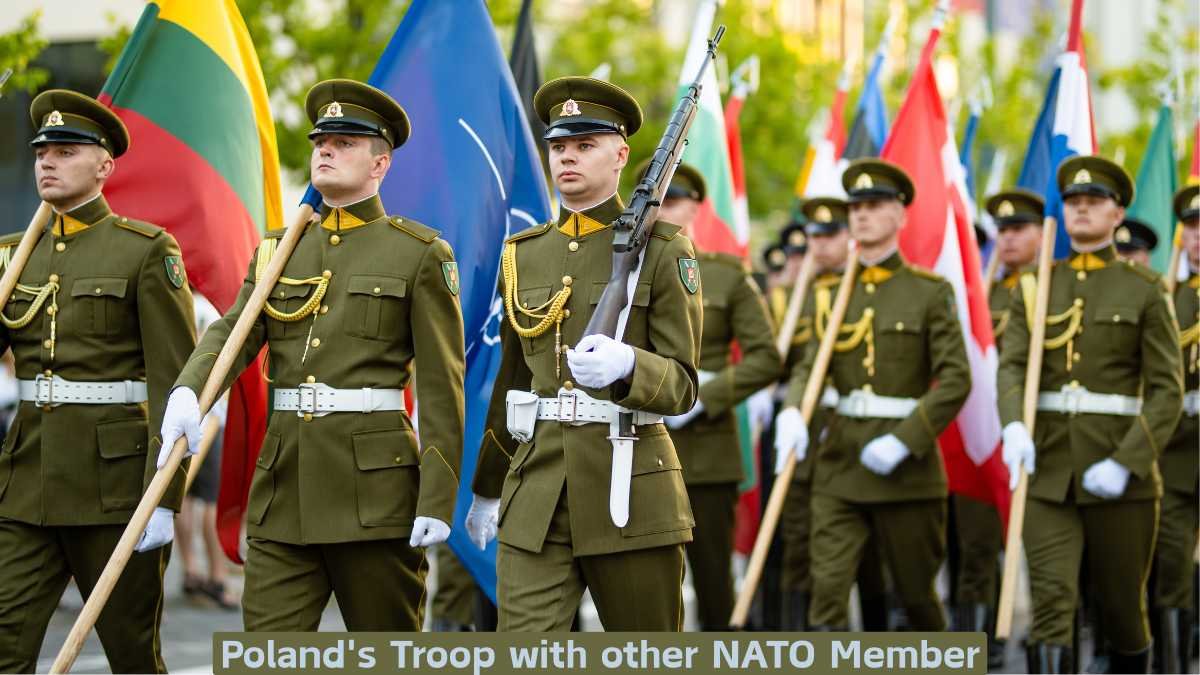
Poland’s role in NATO is huge; it’s the alliance’s highest defense spender by GDP, host to a permanent US military garrison, and sits at one of the most strategically watched stretches of land in Europe.
Before 1999, Poland was not part of NATO; for most of the Cold War, it was on the other side entirely, a founding member of the Warsaw Pact, the Soviet-led military alliance built as a direct counterpart to NATO.
Then communism collapsed, and the Soviet Union dissolved in December 1991, and Poland faced a question most countries never have to answer: when the alliance you were inside for 40 years suddenly ceases to exist, what do you do next?
Poland’s answer was to join NATO, and it has been one of the alliance’s most invested members ever since.
Today it hosts US troops permanently, leads one of NATO’s Enhanced Forward Presence battlegroups, is on track to build one of the largest land forces in Europe, and spends more on defense as a percentage of GDP than the United States does.
From Warsaw Pact to NATO
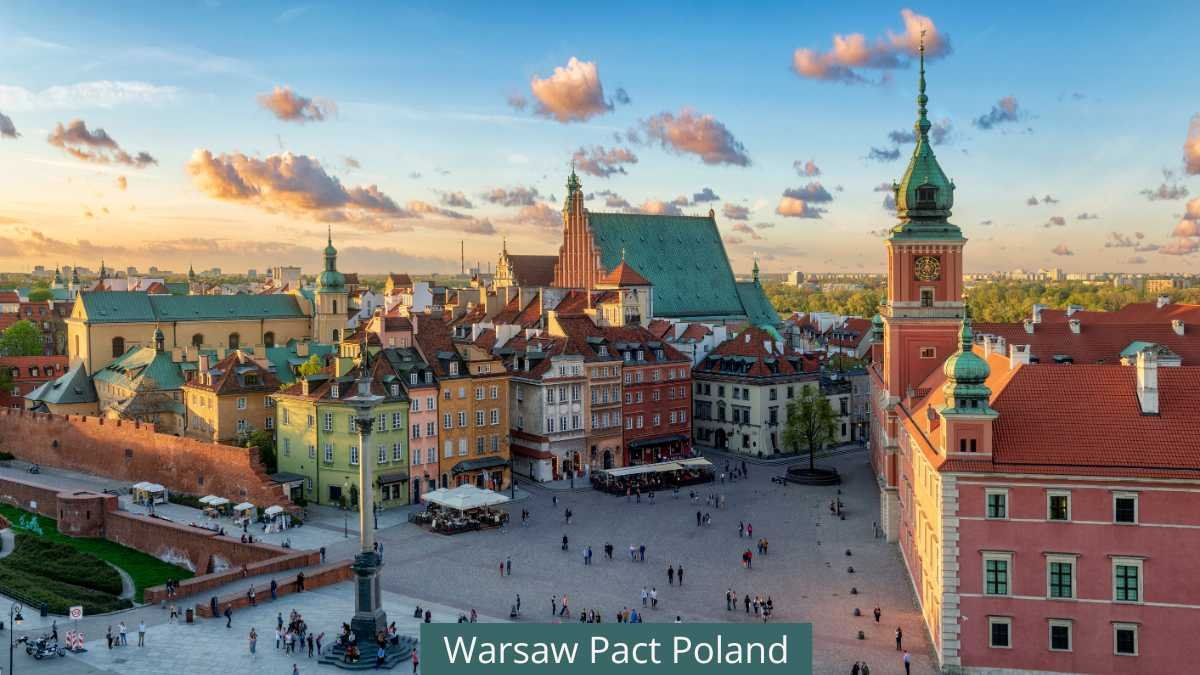
Poland became a founding member of the Warsaw Pact in May 1955, six years after NATO itself was formed.
For almost four decades, its military was technically integrated into Soviet command structures, and its foreign policy operated inside the constraints of the Eastern Bloc.
That changed in June 1989, when Poland held its first partially free elections, solidarity, the independent trade union turned political movement, and won.
By August, Poland had a non-communist prime minister. By the end of 1991, the Warsaw Pact had formally dissolved, and the Soviet Union itself ceased to exist in December of that year.
What followed was a security vacuum that Polish policymakers took very seriously. Poland had been invaded from both east and west in the 20th century.
It lost roughly 17 percent of its entire population during World War II, the highest percentage of any country involved in the conflict.
Polish leaders didn’t want to live as an unprotected buffer between major powers, so the push to join NATO was fast and deliberate.
Russia opposed it strongly throughout the 1990s, arguing that NATO expansion toward its borders violated the spirit of post-Cold War agreements.
The alliance’s response was the 1997 NATO-Russia Founding Act, which included informal commitments not to keep large NATO combat forces permanently in newly admitted member states.
That language shaped NATO’s posture in Eastern Europe for nearly two decades.
Despite the political tensions, Poland, the Czech Republic, and Hungary joined NATO on March 12, 1999, becoming the first former Warsaw Pact members in the alliance.
You can verify the accession date on NATO’s official member history. The question of whether those informal 1997 commitments still constrain NATO’s posture in Poland is one we will come back to.
Poland’s Location Is NATO’s Most Analyzed Chokepoint
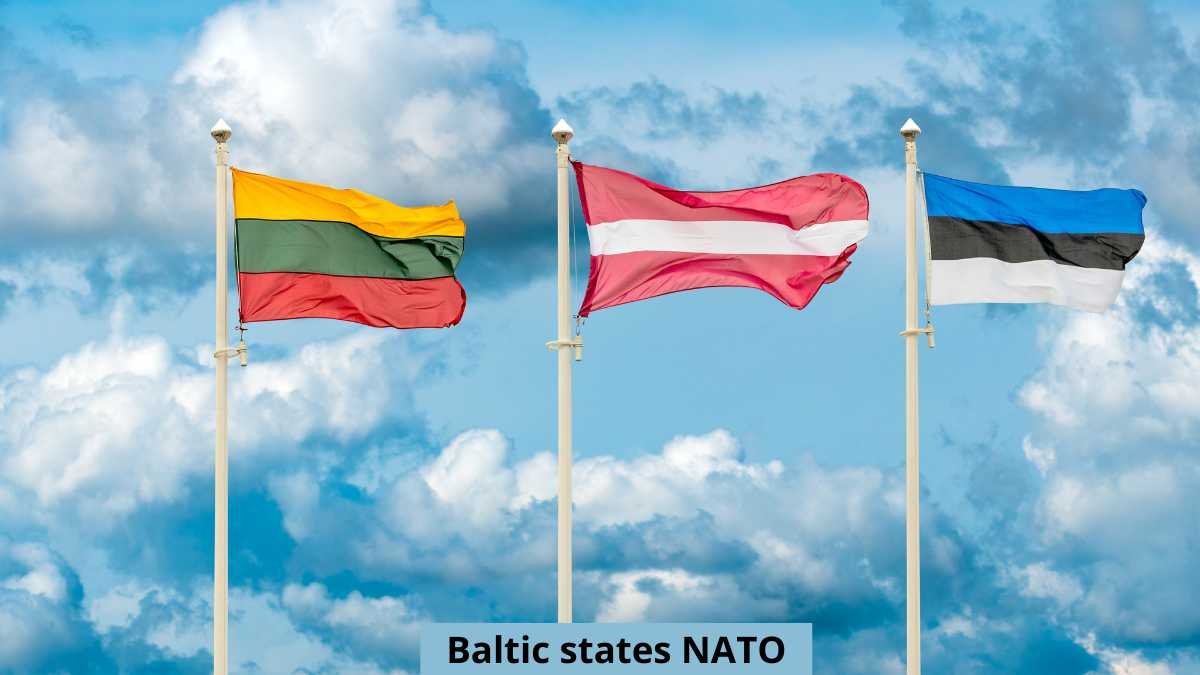
Look at a map of northeastern Europe, between the southern edge of Lithuania and the northeastern tip of Poland, there is a land corridor roughly 104 kilometers wide.
On the east side of that corridor is Belarus, on the west side is Russia’s Kaliningrad exclave, a piece of Russian territory that has no land connection to Russia itself and sits wedged between Poland and Lithuania.
That strip of land is the Suwalki Gap, and it is the only land route connecting Poland to the three Baltic states: Lithuania, Latvia, and Estonia.
If that corridor were cut off or contested, NATO’s Baltic members would be geographically isolated from the alliance’s mainland territory. That is why military analysts and NATO planners have studied it extensively.
The RAND Corporation’s 2016 analysis on NATO’s Eastern Front identified the Suwalki area as one of the most vulnerable points in NATO’s eastern posture.
Poland shares a 418-kilometer border with Belarus, which has hosted Russian military forces for extended exercises since 2021 and has been used as a staging point for migration pressure on the EU’s eastern border.
Poland also sits directly adjacent to Kaliningrad, which hosts Russian Iskander short-range ballistic missile systems capable of carrying nuclear warheads.
So, in simple words, Poland has a specific geography that makes it the hinge point between NATO’s central European body and its three Baltic members.
Any serious NATO planning for northeastern Europe runs through Polish territory by necessity.
Poland’s Military Contributions to NATO
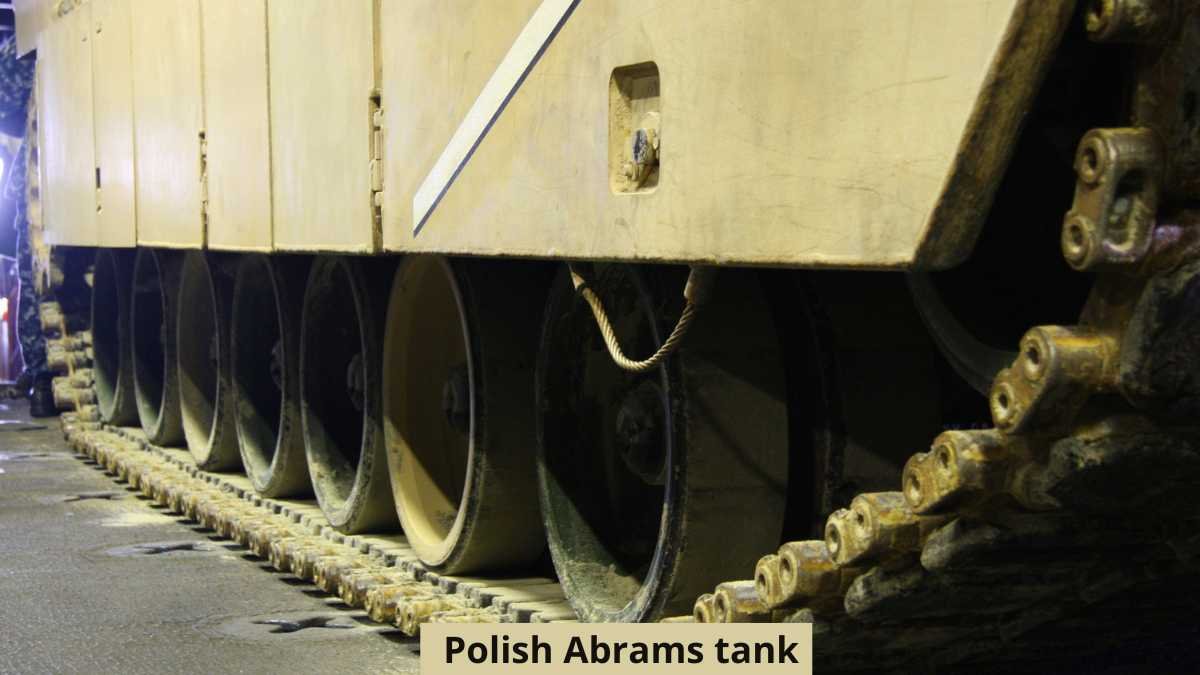
Poland’s armed forces have been growing steadily, and the growth is deliberate.
As of 2025, Poland had approximately 216,000 active military personnel, with a stated goal of reaching 300,000, which would make it one of the largest standing land forces in Europe.
The Polish Ministry of National Defense has published these targets publicly as part of its force development plans.
For NATO contributions specifically, Poland hosts one of the alliance’s four original Enhanced Forward Presence (eFP) battlegroups, the multinational force structure NATO established after its 2016 Warsaw Summit.
Poland’s battlegroup is stationed at the Bemowo Piskie Training Area near Orzysz in northeastern Poland and is led by the United States.
The other three original eFP groups are in Estonia (led by the UK), Latvia (led by Canada), and Lithuania (led by Germany).
Beyond hosting, Polish forces have contributed to NATO and NATO-affiliated missions, including the International Security Assistance Force (ISAF) in Afghanistan, the Kosovo Force (KFOR), and Baltic air policing rotations.
Poland has also contributed forces to NATO’s Very High Readiness Joint Task Force (VJTF), the alliance’s 5,000-strong rapid response force that can deploy within days.
On hardware, Poland has been running one of the largest purchasing programs of any NATO country in recent years. The major contracts include:
- 180 K2 Black Panther main battle tanks from South Korea, plus a Polish-spec variant (the K2PL) in domestic production
- 250 M1A2 SEP v3 Abrams tanks from the United States
- 32 F-35A multirole combat aircraft
- 486 HIMARS multiple rocket launcher systems, the largest single HIMARS order ever placed
- 48 FA-50 light combat aircraft from South Korea
All these things are not just for Poland’s own military capability; these systems are designed to operate together with the US and other NATO forces.
Also read: BRICS Expansion and Its Impact on Global Influences
US Troops and NATO Bases in Poland: What Permanent Presence Means
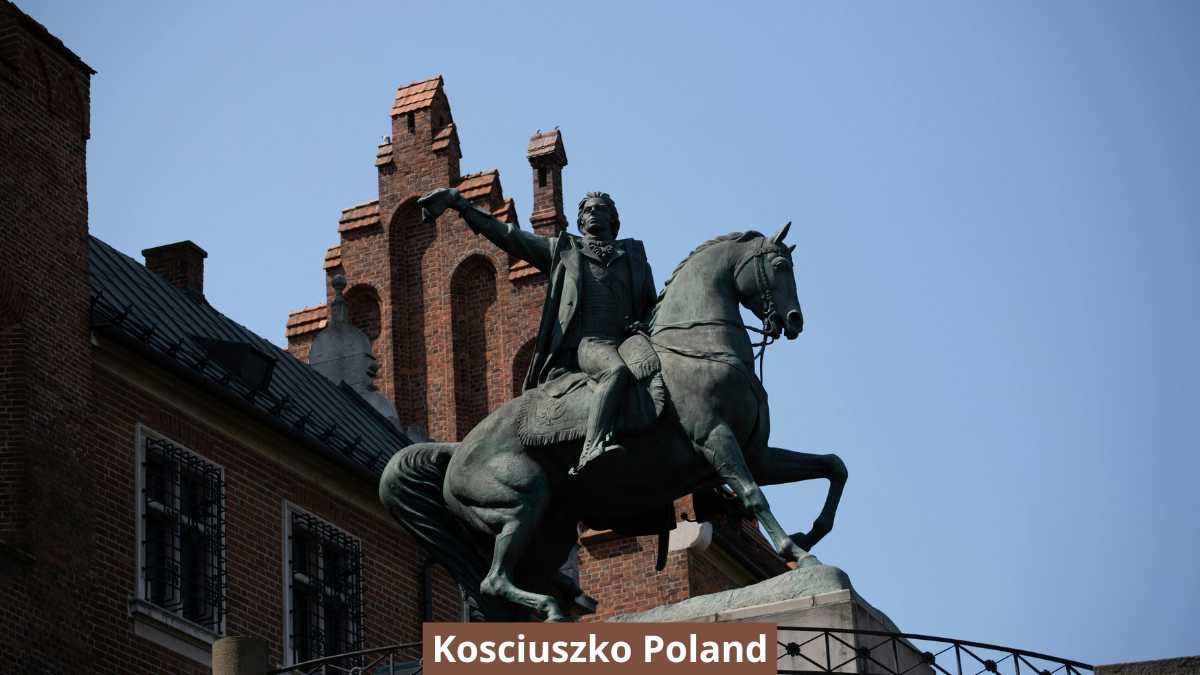
For most of Poland’s time in NATO, the 1997 Founding Act’s informal commitments meant the alliance avoided establishing permanent bases in Eastern Europe.
US and NATO forces rotated through on a temporary basis rather than stationing permanently. That posture shifted in stages after 2016, and more significantly after 2022.
The US established a permanent garrison in Poland known as Camp Koscuszko, located near Poznan in west-central Poland.
- V Corps, the US Army’s forward-deployed corps-level command in Europe, set up its forward element at the same site in 2020.
- V Corps is the highest-level US Army command in Europe, so having it physically based in Poland changes the command and control architecture in a meaningful way.
Beyond Poznan, US and NATO forces operate across multiple Polish sites:

- Powidz Air Base serves as a logistics and pre-positioned equipment hub.
- Lask Air Base hosts US F-16 rotational deployments.
- And at Redzikowo in northern Poland, the US Aegis Ashore missile defense site became operational in 2024 as part of NATO’s European missile defense architecture.
Total US troop presence in Poland has been around 10,000 since 2022, compared to roughly 4,500 before; this increase shows both the eFP expansion and additional bilateral commitments.
The shift from rotational to permanent garrison has different infrastructure, pre-positioned equipment, command authority, and logistical depth than a rotation does.
Spending 4%+ of GDP on Defense: What Poland Is Actually Building
NATO’s formal spending benchmark is 2 percent of GDP; most European alliance members spent years struggling to reach it.
Poland crossed 2 percent and kept going. In 2023, Poland’s defense spending reached approximately 3.9 percent of GDP.
The 2025 budget was set at around 4.7 percent, according to figures from the Polish government. SIPRI’s Military Expenditure Database confirms Poland as one of the fastest-growing defense spenders in Europe over the past five years, both in absolute terms and as a share of GDP.
For context, the United States spends around 3.4 percent of its GDP on defense, according to NATO’s own burden-sharing data.
Poland, a country with an economy roughly 1/17th the size of the US economy, is spending more as a share of its income.
What I find more interesting than the raw number is the industrial policy embedded in how Poland is spending it.
Poland is Building Domestic Manufacturing Capacity

The K2PL program is a useful example; Poland is not just buying South Korean tanks. It also negotiated a technology transfer agreement with Hanwha, the manufacturer, so that a Polish-spec variant of the K2 would be produced domestically.
That means Poland is acquiring hardware and building domestic manufacturing capacity, which are two very different things from a long-term strategic standpoint.
Similarly, the Polska Zbrojownia (Polish Armaments Group) has been consolidating domestic defense manufacturers to reduce supply chain dependence on foreign sources.
This is industrial policy as much as it is defense policy, and it has long-term economic implications beyond just the weapons systems being produced.
Whether Poland can sustain spending at this level through the end of the decade is uncertain. High defense budgets compete with social spending, infrastructure, and the borrowing costs of an expanding public investment program.
Poland’s economy has been growing, but 4 to 5 percent of GDP on defense is not historically sustainable without significant tradeoffs.
That is a real constraint that Polish policymakers will face well before 2030.
Article 4, Article 5, and How Poland’s Collective Defense Actually Works in Practice

These two articles come up constantly in NATO discussions, so it is worth knowing more about what they actually do.
- Article 4 of the NATO Treaty allows any member to request consultations with other members when it believes its security or territorial integrity is threatened. It does not trigger a military response.
Poland invoked Article 4 in November 2022 after a missile struck near the village of Przewodow in eastern Poland, killing two people.
After a joint investigation, NATO and Polish officials concluded it was a Ukrainian air defence missile that had gone off course; it was not a deliberate attack.
- Article 5 is collective defense; an armed attack against one member is considered an attack against all. It has been formally invoked once in NATO’s history: by the United States after September 11, 2001.
Article 5 does not automatically trigger a specific military response; each member decides what action it considers necessary.
The treaty text says members will take “such action as it deems necessary,” which is deliberately flexible rather than automatic.
For Poland, the practical expression of Article 5 is the Enhanced Forward Presence battlegroup on its soil.
Having US troops physically stationed in Poland means that any attack on Poland would immediately involve American personnel, which would raise the escalation cost.
It functions as a deterrence architecture first and a battle plan second.
Poland’s Strategy Toward 2035
Poland’s defense planning extends well beyond its current military purchasing programs.
The ‘Army 2035’ program targets a 300,000-strong regular military combined with a 50,000-strong Territorial Defense Force, known in Polish as the Wojska Obrony Terytorialnej (WOT).
The WOT already exists and is operational; it’s a distributed, locally recruited reserve-style force specifically designed for operations inside Polish territory, trained for scenarios where conventional front lines may be fluid or disrupted.
The WOT concept draws on doctrinal thinking from Finland and the Baltic states: build a pre-positioned, decentralized force that can operate without centralized command if it needs to.
On the alliance level, Poland pushed for NATO to develop updated regional defense plans after years of what Polish analysts described as strategic ambiguity in the alliance’s eastern posture.
At the 2022 NATO Madrid Summit, the alliance adopted new regional defense plans for the first time since the Cold War.
Poland is Expanding Beyond NATO
NATO’s summary of the Madrid commitments indicates Poland’s northeastern region features centrally in the new planning framework.
Poland has also been deepening bilateral security ties outside pure NATO structures, particularly with the United States, South Korea, the United Kingdom, and the Baltic states.
The trilateral cooperation between Poland, Lithuania, and Latvia on Suwalki Gap security planning is a practical example of regional coordination that runs alongside but is not fully dependent on NATO command structures.
Looking past 2030, the open questions are real, but can Poland sustain both the spending and the political consensus that drives it?
Will the US commitment to a permanent presence in Poland remain stable across different administrations?
And how does a 300,000-strong Polish military change the internal balance of influence inside NATO itself? All are uncertain variables.
Conclusion
Poland’s role in NATO in 2026 is very important; it’s not the same as it was when Poland joined in 1999, and it is not what NATO itself expected when the alliance first expanded eastward.
Poland went from a new member looking for security guarantees to one of the alliance’s most active builders of collective defense capability.
It’s important because of geographic exposure, historical memory, high spending, large-scale military purchasing, permanent US presence, and long-term force planning.
The Suwalki Gap, the permanent V Corps headquarters, the 4.7 percent GDP spending, and the 300,000-soldier target are all connected pieces of a single strategic posture.
Whether that posture delivers the security outcomes Poland wants by 2035 depends on variables that are hard to predict: how alliance politics evolve, whether the spending is sustainable, and how the broader European security environment looks five years from now.
Frequently Asked Questions
Was there a real debate inside Poland about joining NATO, or was it always obvious?
There was a broad political consensus by the early 1990s, but it was not simple.
Some Polish officials and analysts worried about provoking Russia by pushing too hard for membership.
And the bigger challenge was external: whether NATO would accept new Eastern European members, on what conditions, and how to manage the diplomatic friction with Moscow.
The debate inside Poland was less ‘should we join’ and more ‘will they let us in, and under what terms? The 1997 NATO-Russia Founding Act and its informal commitments were partly a result of that negotiation.
Why does Poland spend more than the US as a percentage of GDP on defense?
The US spends far more in absolute dollars, but as a share of GDP, Poland at 4.7 percent exceeds the US at roughly 3.4 percent.
Poland’s higher share reflects its geographic exposure, a political consensus that current security conditions require serious investment, and the fact that defense spending polls very differently in Poland than it does in Western Europe.
It is a strategic calculation and partly domestic politics.
What exactly is the Suwalki Gap, and why does NATO care so much about it?
It is a 104-kilometer land corridor between Belarus to the east and Russia’s Kaliningrad exclave to the west. It is the only overland connection between Poland and the three Baltic states.
If that corridor were blocked, NATO’s Baltic members would be cut off from the alliance’s main territory.
Poland sits at the southern edge of this corridor, which is why its defense planning is directly relevant to Baltic security too, not just its own.
What is the WOT, and how is it different from Poland’s regular military?
The Wojska Obrony Terytorialnej (Territorial Defence Force) is a 50,000-strong force built specifically for operations inside Polish territory.
It is locally recruited by region, distributed across the country, and trained for scenarios where conventional command structures might be disrupted.
It is inspired by similar concepts from Finland and the Baltics.
The idea is that even if a conventional front shifted, there would already be a trained, distributed force inside Polish territory operating independently.

Abraham is the founder and sole writer of Geopolitics Decoded. Based in New Delhi, India, he has been researching and analyzing international affairs since 2019, with a focus on great-power competition, European security, energy geopolitics, and global diplomacy. He is currently pursuing independent coursework in global diplomacy through SOAS University of London. His fact-based, deeply contextual analysis has earned millions of interactions across social media platforms, including Threads and Instagram. Every article on this site is independently researched, written, and verified by Abraham personally. Read Abraham’s full author bio