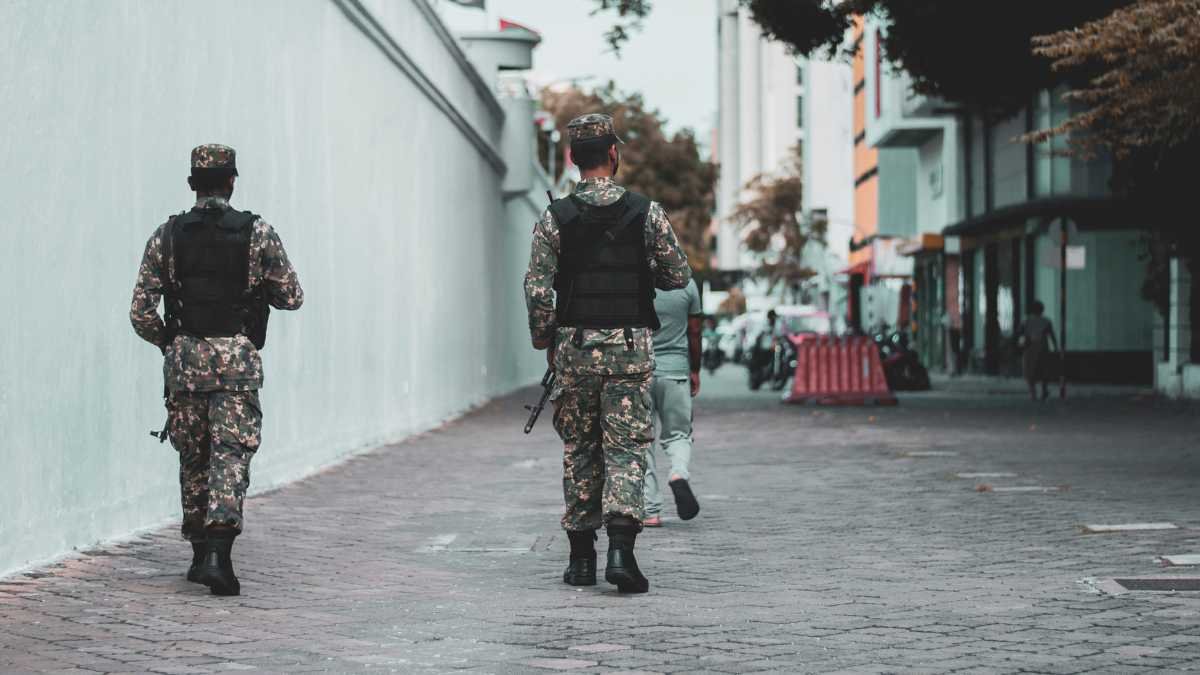
Thousands of soldiers right now are patrolling roads in eastern Congo, monitoring fragile ceasefires in South Sudan, standing watch in Lebanon.
They are doing everything they are supposed to do, yet people aren’t living in peace, so what problem is there actually?
Well, it’s all about the UN peacekeeping challenge in 2026.
It’s about a system that was designed in a completely different world, now operating in conflicts that look nothing like what it was built for.
And a political and financial environment that is strangling it from the outside.
Under That Peacekeepers Aren’t There to Stop a War
UN peacekeepers are not there to stop a war; they’re there because a war has supposedly already stopped.
The three core principles of UN peacekeeping, as the UN itself states, are:
- Consent of the parties
- Impartiality
- And non-use of force except in self-defense and defense of the mandate.
Force, when used at all, must be “calibrated,” “proportional,” and always a last resort.
Now it sounds reasonable, but in practice, it means a peacekeeper watching an armed group march toward a village has to calculate multiple things in real time, such as:
- Threat is close enough
- It falls within the mission’s area
- Using force would cost the mission the host government’s cooperation?
- Would it damage the broader operation?
Now in real time, under pressure, with unclear instructions, it’s a bit hard.
When Impartiality Becomes Paralysis
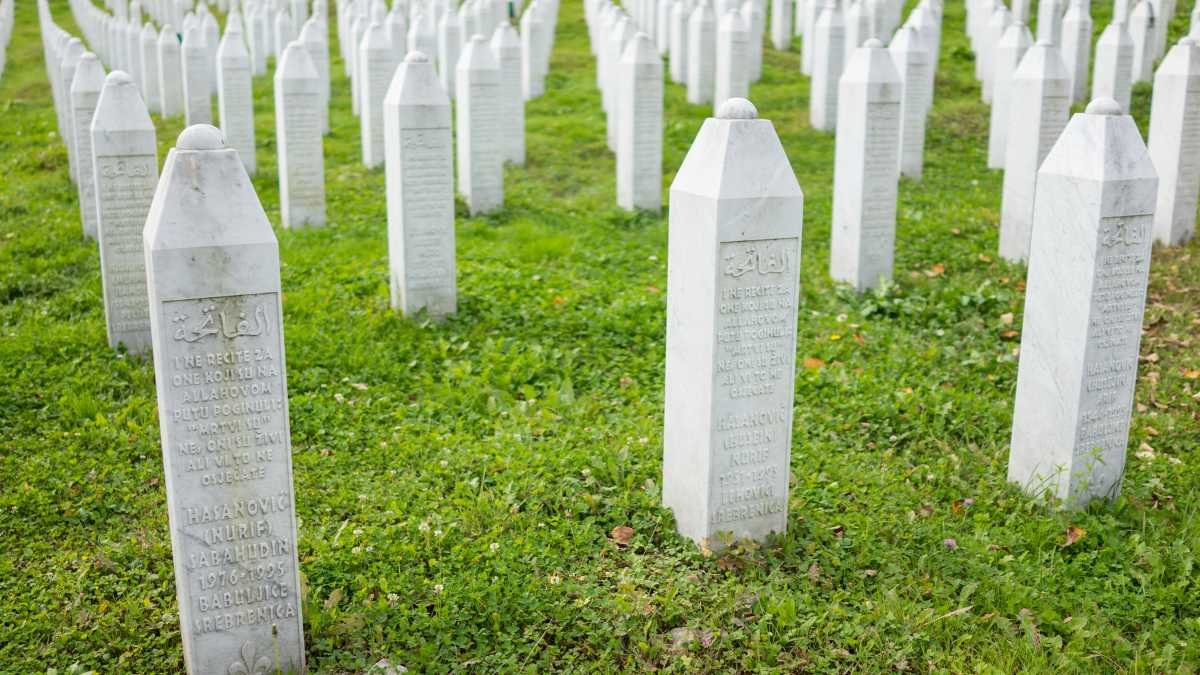
In Bosnia in 1995, UN peacekeepers were frozen by mandate restrictions, and they watched while Srebrenica happened.
In Rwanda in 1994, General Romeo Dallaire sent a fax to UN headquarters warning of the coming genocide and was told to stand down.
The UN has tried to fix this, and since the early 2000s, many missions have included a “Protection of Civilians” mandate with language authorizing “all necessary means” to protect civilians.
But as analysis from the Lieber Institute at West Point points out, even this isn’t a clear go-ahead.
There is “an upper limit to what peacekeepers may lawfully do,” and there is “a continuing lack of knowledge at all levels of command” on when force is actually required.
So even when the mandate technically allows action, soldiers on the ground often don’t know exactly what is authorized.
Congo Has Had UN Troops Since 1999, then Why Is Eastern Congo Still on Fire?
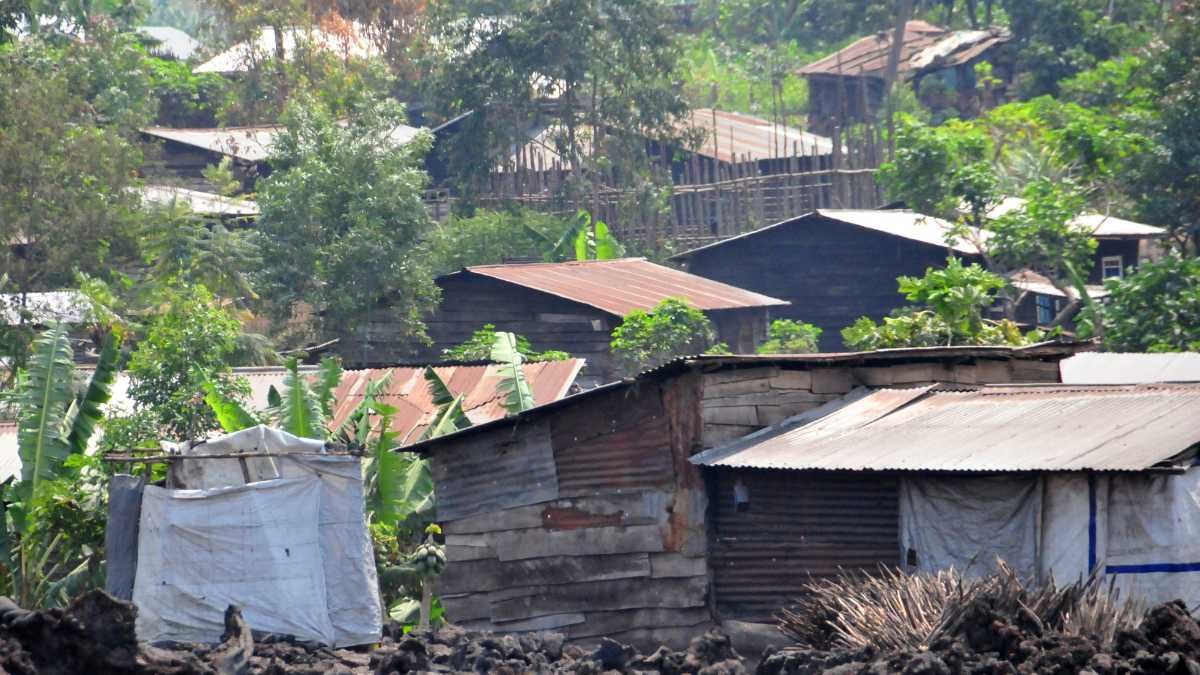
If you want to see what UN peacekeeping challenges look like up close in 2026, look at the Democratic Republic of Congo.
MONUSCO, the UN Organization Stabilization Mission in DRC, has been operating there since 1999, and it’s been 27 years.
Yet, eastern Congo is still one of the most dangerous places on earth for civilians.
In January 2025, the M23 rebel group, backed by Rwandan forces according to a UN Group of Experts report, captured Goma.
It is the largest city in eastern DRC and the region’s main logistics and aid hub.
Thirteen UN peacekeepers were killed in that offensive, and this mission that was already supposed to have left by December 2024 had to stay because the security situation fell apart.
Stuck: Too Weak to Win, Too Needed to Leave
The Security Council renewed MONUSCO’s mandate in December 2025 until December 2026, with an authorized ceiling of 11,500 military personnel. That resolution itself called the situation a “rapidly deteriorating security and humanitarian crisis.”
But what I see worth pointing out is the corner MONUSCO is painted into.
The Congolese government spent years demanding that the mission leave, and local protests, some turned violent, accused it of being useless.
But when M23 moved on Goma, that same government quietly stopped calling for withdrawal, and the mission was simultaneously too weak to actually beat M23 and too embedded to leave without creating a total security gap.
An ISS Africa analysis from January 2026 said: MONUSCO “replicates general peacekeeping aims without sufficiently adapting to the DRC context,” its mandate is “overly rigid and territorially limited,” and the mission has become “increasingly misaligned with realities on the ground.”
Around 7.3 million people are internally displaced in eastern DRC as of late 2025, the highest number in Africa.
So, we can now see why there is violence even when soldiers are patrolling.
Host Countries Turn on the Mission, and It Causes Problems
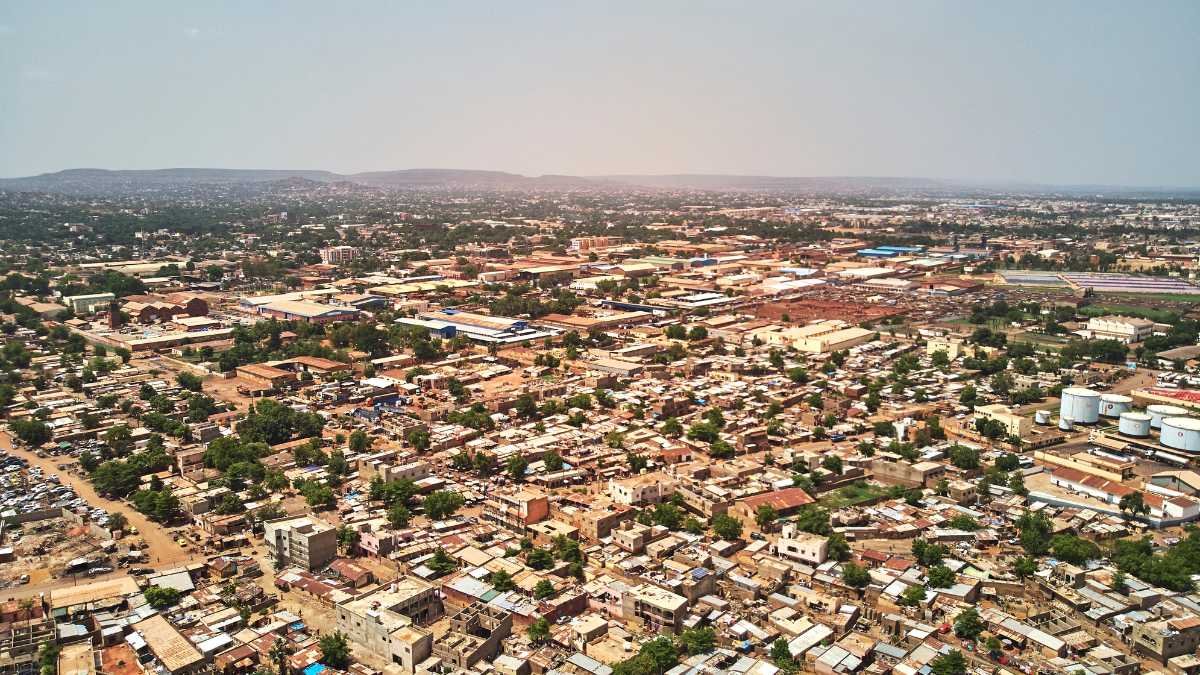
Mali is the good case we can discuss; MINUSMA was one of the UN’s largest missions ever, with over 15,000 personnel at its peak.
It was also the deadliest mission in the UN’s history, with 303 peacekeepers killed over a decade.
In 2023, Mali’s military government simply expelled it, and by the end of 2023, MINUSMA was gone.
What came next? Mali got worse: the junta brought in Russian Wagner Group fighters, pushed France out entirely, and violence from armed groups spread.
A decade of UN presence didn’t build the security foundation that would have let the country survive without it.
South Sudan Right Now Shows the Same Pattern
South Sudan is moving through the same thing more slowly; earlier this year, the Security Council was warned that South Sudan risks sliding back into full-scale civil war.
The UN Mission there, UNMISS, has faced repeated pressure, including directives from the host government to pull back from certain areas.
In February, the U.S., which leads negotiations on South Sudan at the Council, warned that the host government’s non-cooperation “will constitute a threat to the mission’s viability.”
So the main problem is that peacekeepers need the host government’s cooperation to function, and when that cooperation is conditional or hostile, the mission can’t enforce anything; it can only watch, document, and wait.
The UN Could Run Out of Money for Peacekeeping by July 2026
This one is happening right now: the 2025 to 2026 UN peacekeeping budget approved by the General Assembly was $5.38 billion.
But as of early 2026, there is a $2 billion gap because member states aren’t paying what they owe.
The United States is the biggest factor, because historically Washington covered 27% of the total peacekeeping budget.
But the Trump administration canceled around $800 million in peacekeeping funds that had already been approved for 2024 and 2025.
The White House budget office has also pushed to eliminate all U.S. peacekeeping contributions for 2026 completely.
Fewer Patrols, Fewer Troops, Less Protection
In October 2025, Secretary-General Antonio Guterres told Security Council members the UN would need emergency steps: a 15% cut in spending across all missions and the withdrawal of around 25% of uniformed peacekeepers currently deployed.
South Africa has already said it will pull its forces from MONUSCO’s Force Intervention Brigade by the end of 2026.
What that looks like on the ground is fewer patrols, less air support, field offices closing, and less ability to reach civilians in dangerous areas.
In places like eastern Congo, rural South Sudan, and some parts of the Central African Republic, this creates gaps that armed groups quickly fill.
By May 2026, the UN was warning it could run out of operating cash by July if member states don’t pay.
No New UN Mission Has Been Authorized in Over a Decade
Even if money wasn’t an issue, there’s a different breakdown at the political level.
The Security Council has not authorized a single new peacekeeping mission since 2014, and that’s more than twelve years.
Every major new conflict since then- Sudan’s civil war, Gaza, the Sahel collapse– has either gotten no peacekeeping response or ended up expelling the existing mission.
And the biggest reason behind that is the veto structure: five permanent members- the U.S., UK, France, China, and Russia- have to broadly agree for a mission to be authorized.
They increasingly don’t, and in a growing number of crises they are actively on opposite sides; that’s why some nations even want UNSC Reforms.
However, the Crisis Group noted in its 2025-2026 outlook that armed factions in Sudan have blocked UN diplomacy and cut off humanitarian access.
In Gaza, UN Humanitarian aid operations have been pushed aside, and that happened because the political agreement and the peacekeeping function are breaking down exactly when the need for it is growing.
A SIPRI report from May 2026 described what’s filling that gap: responses to conflicts are shifting toward “unilateral, bilateral and ad hoc arrangements that are often more militarized and more directly influenced by the self-interest of the states involved.”
Countries are not replacing UN peacekeeping with something better, but they replace it with something messier.
Berlin, 130 Countries, and Not Much Has Changed

In May 2025, Germany hosted the UN Peacekeeping Ministerial in Berlin, and over 130 countries showed up to the meeting.
74 made pledges of support, and an independent study commissioned ahead of the event offered 30 different models for what future missions could look like.
The actual theme was “The Future of Peacekeeping.”
A year later, in May 2026, the International Peace Institute ran a follow-up roundtable to check in.
The landscape, IPI said, “remains uncertain.” And the cash crisis is still going on. Security Council dynamics are “more contested.” Also, the broader environment is still pulling apart.
What’s my opinion on all that?
My opinion on Berlin is that the diplomatic world showed up, made statements, and went back home.
The things that actually produce violence are weak governments, regional powers using armed groups as proxies, and collapsed peace deals.
They won’t change anything if 130 countries sit in a room in Germany. And if they show support that stays at the statement level. I won’t call it reform because it feels like optics in my view.
Conclusion
The soldiers patrol every day because that’s what the UN mandate says to do, but the mandate was written for a world where wars had clear endings, governments invited peacekeepers in good faith, and where the Security Council broadly agreed on what needed to happen.
So now, where is that world? It’s mostly gone.
In 2026, UN peacekeeping is caught between a funding crisis it didn’t create, mandates that don’t fit the conflicts they’re deployed into, host governments that are either pushing missions out or refusing to cooperate, and a Security Council that has not authorized a new mission in more than a decade.
So, I won’t call it a problem that soldiers are there but not peace; I will say the system around them is failing to keep up.
And the countries with the most power to change that are either pulling their money or going around the UN entirely.
FAQs
Why do UN peacekeepers sometimes stand by while people are being hurt nearby?
Peacekeepers operate under mandates that define where they can go and what they’re allowed to do.
Even when a mandate includes civilian protection language, there are gaps in who decides when that protection kicks in and at what level.
Using force without clear authorization risks losing the host government’s agreement to have the mission there at all, which could end the whole operation.
So soldiers sometimes hold back because the system they’re in hasn’t given them clear permission.
Can the Security Council even agree on anything related to peacekeeping right now?
On existing missions, mostly yes, they renew them, sometimes with changes, but on authorizing anything new, NO.
The last new mission was approved in 2014; when Sudan collapsed into civil war in 2023, there was no peacekeeping response because Russia and China were not going to allow one the U.S. and France would support, and vice versa.
The same dynamic is playing out across almost every new crisis.
The five permanent members still agree that peacekeeping exists as a concept, but just can’t agree on where it should go or what it should be allowed to do in any specific situation that actually matters.
If the U.S. fully stops paying for UN peacekeeping, what actually happens to the missions?
Several missions would shrink or become impossible to run; the U.S. historically covered 27% of the entire peacekeeping budget.
No other country is anywhere close to being able to fill that; China is the second-largest contributor to the UN regular budget at around 20%, but its peacekeeping contributions per capita have been far lower.
European countries have been asked to step up and haven’t done so at anywhere near the scale needed.
So if U.S. funding disappears completely, we will be looking at missions getting cut in half or consolidated, field offices closing, patrols stopping in areas that are already barely covered.
Have UN peacekeeping missions ever worked?
Yes, some worked very well, for example in Liberia, Sierra Leone, Timor-Leste, Cote d’Ivoire.
The missions helped end wars, supported elections, and built enough stability that the UN could leave.
However, some things were common in these nations:
- A peace agreement to support rather than a conflict still going on
- Host governments that actually wanted the mission there
- A Security Council that stayed unified
- Regional neighbors who weren’t actively undermining things.
Today’s conflicts almost never check those boxes, so yeah, that is the difference.
Is there any serious proposal for what comes after the current peacekeeping model?
There are proposals, but they’re at an early stage.
The independent study commissioned for the Berlin Ministerial in 2025 laid out 30 possible models for future peace operations, ranging from smaller and more targeted missions to greater reliance on regional organizations like the African Union.
Some countries are already moving in that direction, funding AU-led missions rather than UN ones.
But those regional missions come with their own problems:
- They’re less funded
- Less consistent
- Often more influenced by the political interests of the countries contributing troops.
So no one has agreed on what replaces the current model; these are just ideas.

Abraham is the founder and sole writer of Geopolitics Decoded. Based in New Delhi, India, he has been researching and analyzing international affairs since 2019, with a focus on great-power competition, European security, energy geopolitics, and global diplomacy. He is currently pursuing independent coursework in global diplomacy through SOAS University of London. His fact-based, deeply contextual analysis has earned millions of interactions across social media platforms, including Threads and Instagram. Every article on this site is independently researched, written, and verified by Abraham personally. Read Abraham’s full author bio