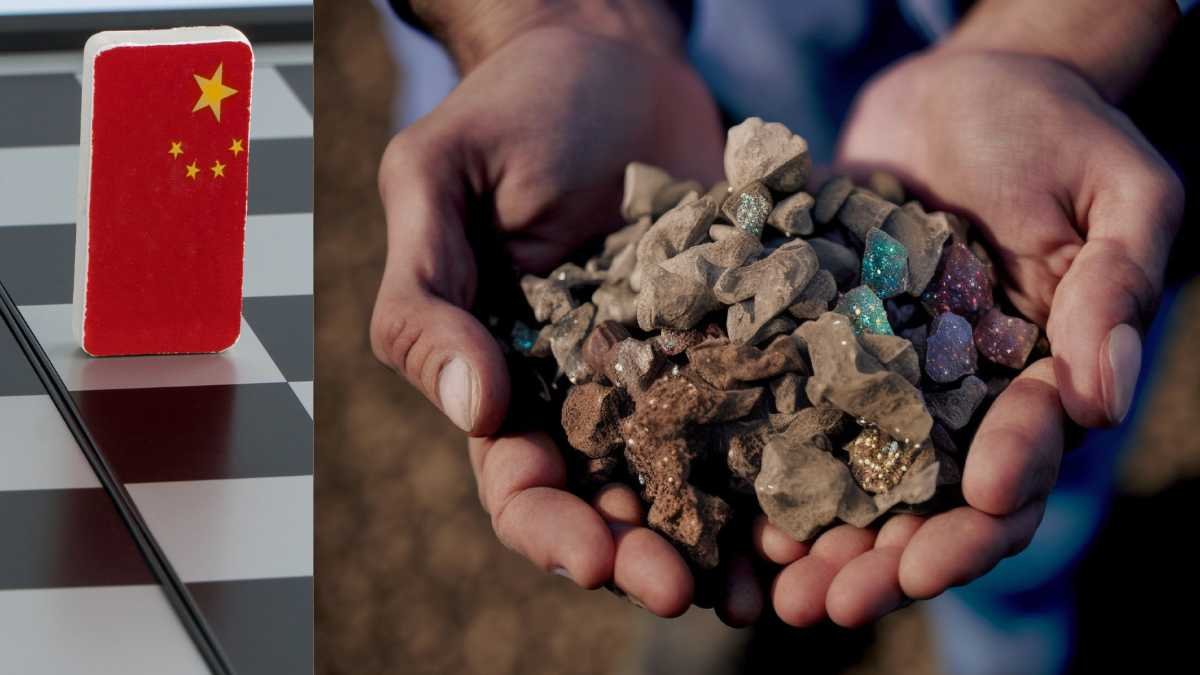
Whoever controls rare earth minerals controls the technologies that will define the next 50 years. And right now, one country controls most of it, and that is China.
Rare earth minerals are a group of 17 metallic elements. They sound obscure, but they are literally everywhere in modern life.
They are inside your phone, electric motors of EVs, magnets of wind turbines, guidance systems of missiles, and inside the engines of fighter jets like the F-35.
The US Geological Survey estimates that a single F-35 aircraft uses roughly 417 kilograms of rare earth materials.
Now, the most important thing that makes every government in the world nervous is that China controls roughly 60% of global rare earth mining and somewhere around 85-90% of global processing and refining capacity, according to the International Energy Agency.
That gap between mining and processing is important because even if a country finds a deposit, it mostly needs China to turn it into something usable.
So when President Trump recently visited China, several major American CEOs in tow, it was not just a diplomatic trip.
Supply chains, trade balances, and yes, critical minerals were somewhere in that conversation.
This is what rare earth geopolitics looks like in practice, and it has been building for decades.
What Rare Earth Minerals Actually Are (And Why 17 Elements Matter So Much)

The 17 elements include neodymium, dysprosium, lanthanum, cerium, praseodymium, yttrium, and others.
You may not have heard their name, but their physical properties are what matter.
They have unusual magnetic, luminescent, and electrochemical characteristics that are hard to replicate with other materials.
- Neodymium and dysprosium together make the permanent magnets inside EV motors and wind turbine generators. Without those magnets, you do not have an efficient EV drivetrain.
- Lanthanum goes into hybrid car batteries and camera lenses.
- Yttrium is used in LED lighting and lasers.
- Europium and terbium are used in color displays (red and blue color television and smartphone screens) and energy-efficient lighting, like green phosphors in fluorescent and LED lighting.
Fact: “RARE” label is actually a bit misleading, as most of these elements are not particularly scarce in the Earth’s crust.
However, these critical minerals almost never occur in concentrated deposits that make mining economical, and even when they do, separating and refining them is very complex and environmentally messy.
That is the technical barrier China cracked decades before anyone else, and that lead is what gives it so much leverage today.
China’s Grip: How It Got Here and How Deep It Goes
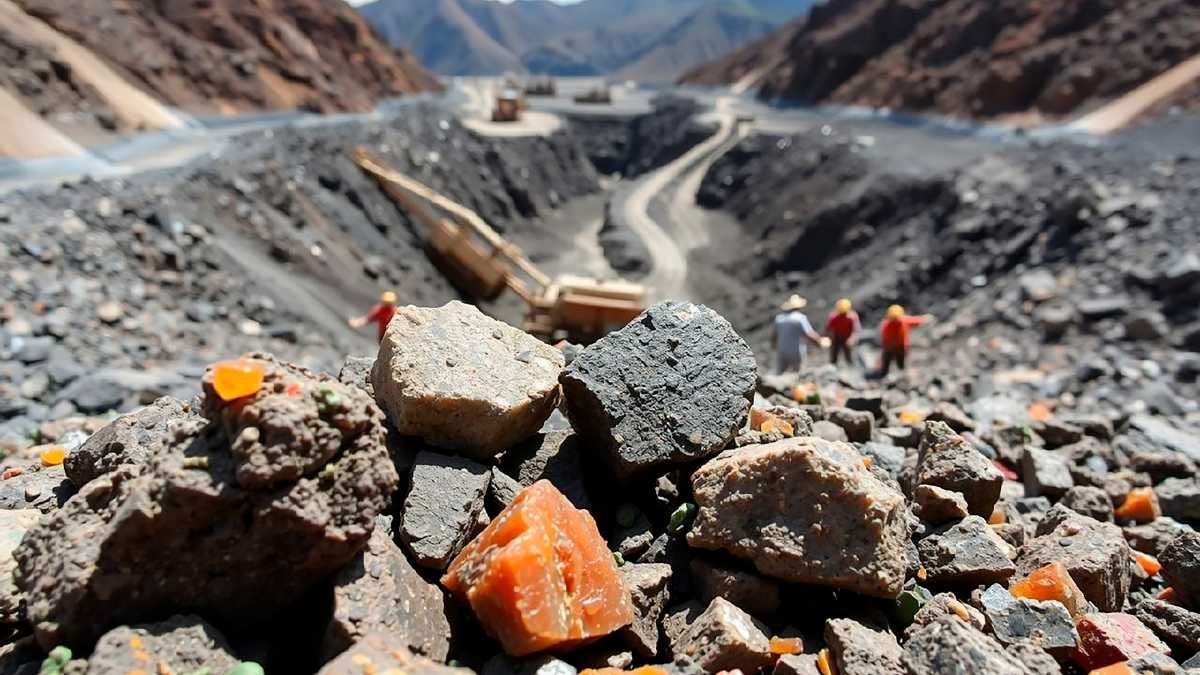
Back in 1992, Deng Xiaoping reportedly remarked during a visit to Jiangxi province:
The Middle East has oil. China has rare earths.
That statement turned into a 30-year industrial strategy.
China built out its mining and processing capacity through the 1990s and 2000s, often accepted environmental costs that Western countries were not willing to tolerate, and consistently undercut global prices to the point where rare earth mines in the US, Australia, and elsewhere became unprofitable and closed.
By the 2000s, China’s share of global rare earth production had crossed 90%.
It has come down a bit since then as other countries started paying attention, but the processing dominance remains.
According to the USGS 2024 Mineral Commodity Summaries, China still accounts for roughly 60% of global rare earth mine production and an estimated 85-90% of separation and processing capacity.
Besides this, the clearest demonstration of this leverage came in 2010. After a maritime dispute with Japan near the Senkaku/Diaoyu islands, China informally restricted rare earth exports to Japan.
Japanese electronics and automotive industries, deeply dependent on Chinese supply, felt it immediately, and prices spiked globally.
This is a case study in how supply chain concentration can translate into geopolitical pressure, and it changed how the US, Japan, and Europe started thinking about this. The New York Times has a breakdown of China’s Rare Earth Control Chokehold.
How Important these Minerals are for Magnets, Missiles, Military & More
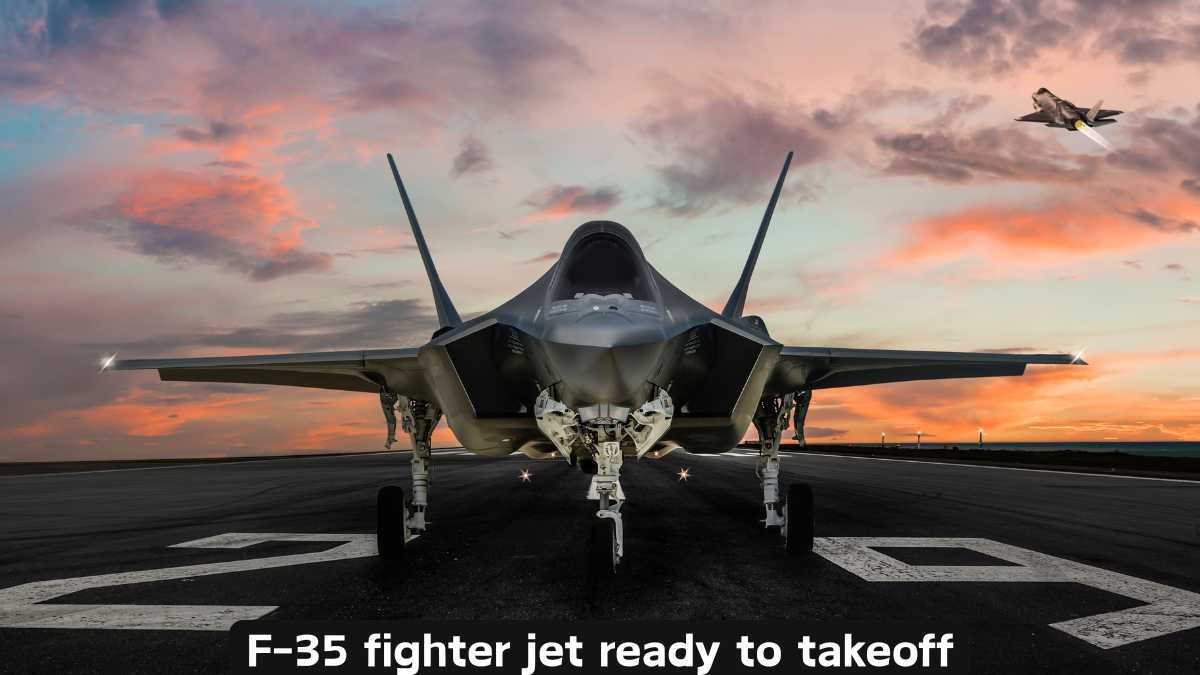
The F-35 fighter jet uses roughly 417 kilograms of rare earth materials per unit, as documented by the US Government Accountability Office.
That includes samarium-cobalt magnets in the engines, terbium and dysprosium in actuators, and lanthanum in optical components.
With roughly 2,500 F-35s planned or in service across the US and allied nations, the numbers add up fast.
- Precision-guided munitions use rare earth elements in their targeting systems.
- Nuclear submarines use them in sonar equipment.
- Night vision goggles, communications gear, and radar systems all contain rare earth components.
The RAND Corporation has noted that rare earth supply chain disruptions could carry real consequences for US military readiness, not in a hypothetical sense but in a very operational one.
Then there are semiconductors. And gallium and germanium are not technically rare earth elements, but they are in the same “critical minerals” conversation because China controls a large share of their production.
In August 2023, China announced export controls on both, specifically citing national security grounds.
Gallium is used in compound semiconductors, radar systems, and high-efficiency solar cells.
That move was a direct signal about how supply chain leverage works in practice.
Trade War and Export Bans: What Has Already Happened
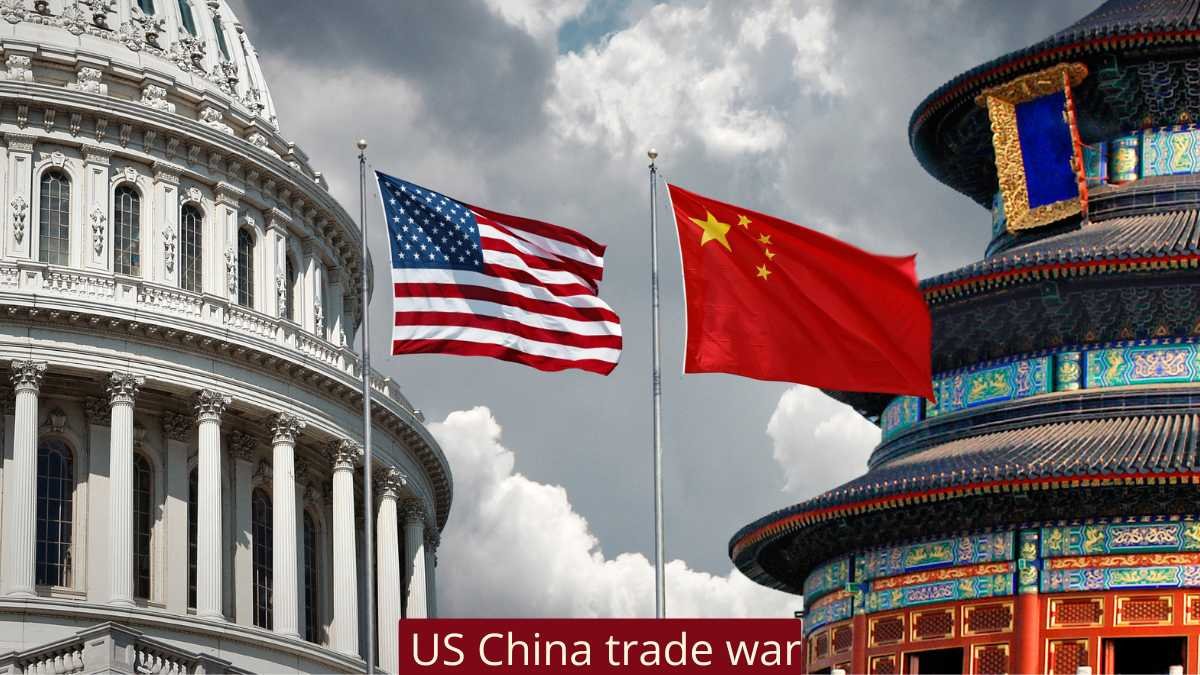
The US-China economic standoff has been escalating for years, and critical minerals are central to it.
In 2023, China moved on gallium and germanium, and then later that year it added graphite, which is really important for EV batteries and nuclear reactors.
After that, in 2024, China expanded controls further. It restricted rare earth processing technology exports, which is more significant than restricting raw materials.
And technology is very important, because many nations have rare earth minerals but not the technology, so if China restricts the technology, other countries cannot easily build their own processing capacity.
However, after Trump, he responded with tariffs, investment restrictions, and supply chain subsidies through the Inflation Reduction Act’s critical minerals provisions and the CHIPS Act.
Some of the broader tariff actions faced legal challenges in US federal courts, with the Court of International Trade issuing rulings that created implementation uncertainty.
Right now, the main tension is: the US currently needs China for critical minerals processing even as it tries to reduce that dependence.
And this is not a contradiction that resolves quickly, and it explains the careful diplomatic navigation that has characterized US-China relations on trade in the past couple of years.
Country by Country: Where Each Nation Stands
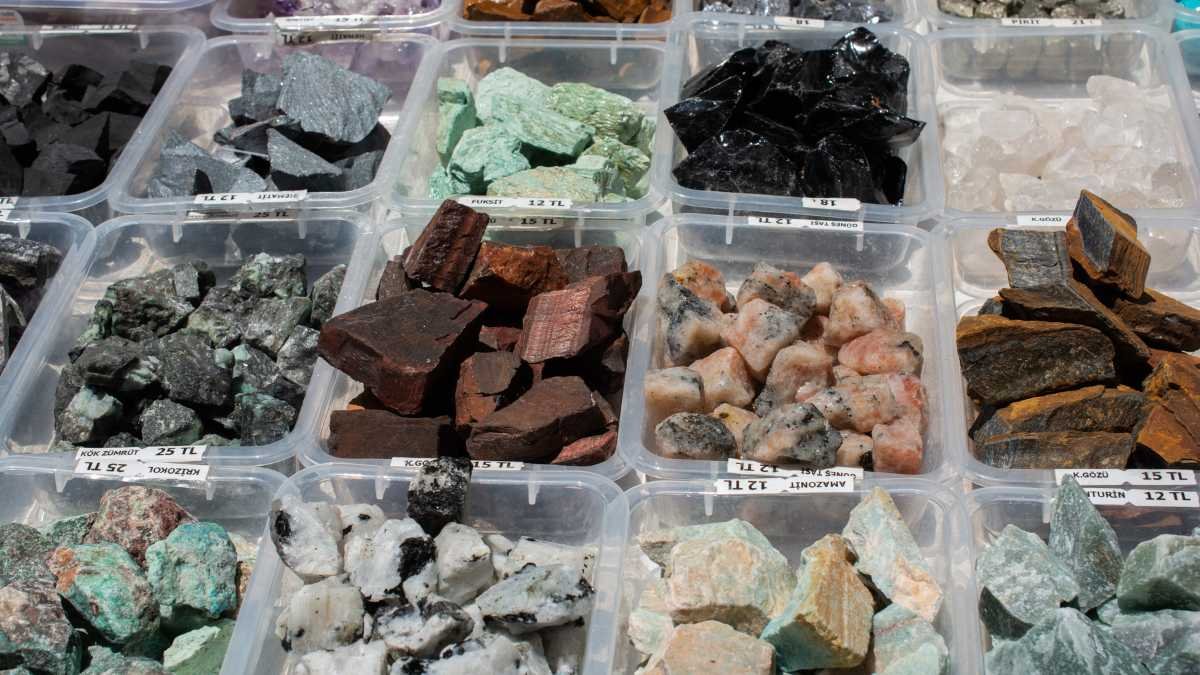
China
It is not just the dominant producer; China is the dominant processor, and it has been systematically investing in mines across Africa, Southeast Asia, and Latin America to lock up future supply.
Its approach to rare earths is deeply integrated with its broader industrial strategy, including its global lead in EV manufacturing and wind turbine production.
United States

The US has the Mountain Pass mine in California, operated by MP Materials, which is currently the only active rare earth mine in the country.
The US government has been investing in it through the Department of Defense’s Defense Production Act authority.
But the US still largely ships its ore to China for processing. And this, circularity, is the problem.
India
India has the world’s sixth-largest rare earth reserves, estimated at around 6.9 million tonnes by the USGS.
In 2023, the Indian government published a 30 Critical Minerals List, covering those it considered important. It also announced plans to strengthen supplies through mining partnerships with countries such as Australia, Argentina and others.
India’s positioning as a non-China alternative in global supply chains is becoming more relevant to Western governments, even if the execution gap between strategy and operating capacity is too much.
Russia
Russia has significant mineral wealth in its Arctic and Siberian territories, including cobalt, nickel, platinum group metals, and some rare earth deposits.
But since 2022, Western sanctions have made investment in Russian mining politically and legally complex.
So Russia has critical mineral wealth, but the access is complicated.
Congo (DRC)

The DRC is not strictly a rare earth story, but it’s central to the broader critical minerals picture because it supplies roughly 70% of the world’s cobalt, essential for lithium-ion batteries, according to the USGS cobalt data.
The governance challenges, external actor involvement in Congolese mining, and the complex local political environment make this one of the most difficult supply chain dependencies to manage.
Also read: How Europe is dealing with 2026 Energy Crisis.
Trump, Greenland, and the Raw Logic of Resource Competition
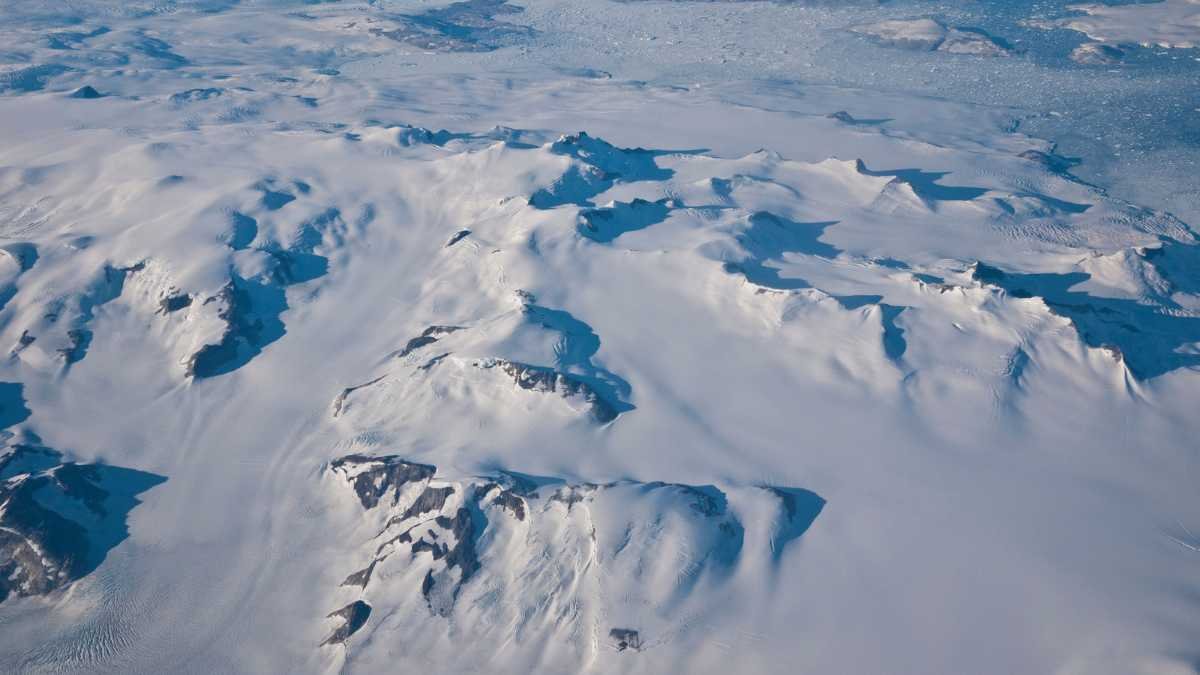
President Trump’s interest in Greenland is easy to dismiss as unusual, but the underlying logic is not complicated.
Greenland is estimated to hold some of the largest undeveloped rare earth deposits outside of China, particularly in the Kvanefjeld/Kuannersuit area, alongside uranium and offshore oil resources.
The USGS has assessed Greenland’s mineral potential as significant and accessible as Arctic conditions change over time.
Greenland is an autonomous territory of Denmark, a NATO ally, so there is no legal path for acquisition.
But US investment interest, military attention, and diplomatic engagement with Greenland’s government have all followed the same logic: secure access to strategic resources before someone else does.
The EU’s Critical Raw Materials Act of 2023 has a similar motivation, specifically to reduce dependence on single-source supply chains for materials the European economy cannot do without.
All of this is the same resource competition wearing different diplomatic clothing.
The Processing Gap: The Problem That Actually Needs Solving
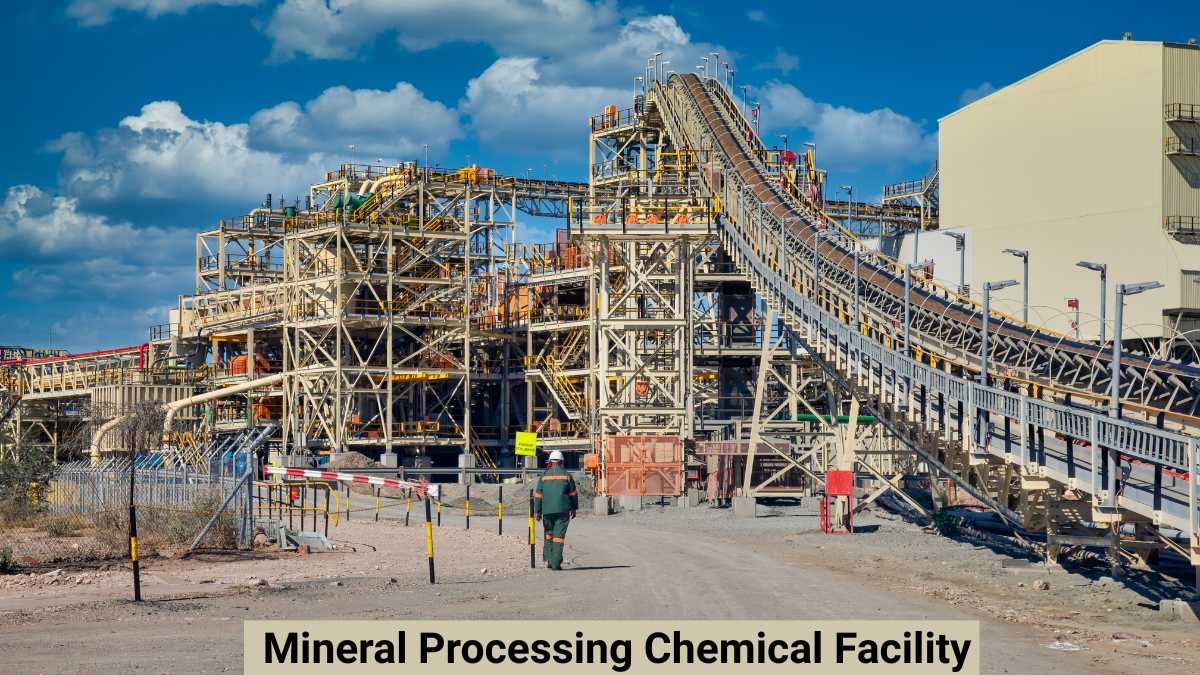
Finding the ore is not the hard part, but building processing and refining capacity is.
Rare earth processing involves complex solvent extraction chemistry, high temperatures, and produces radioactive waste because many deposits are found alongside thorium and uranium.
It is expensive, technically demanding, and not something you build in five years.
Australia’s Lynas Rare Earths is currently the largest rare earth producer outside China, with processing facilities in Malaysia.
The US government has been investing in Lynas as part of its supply chain diversification strategy.
But Lynas represents maybe 10-12% of global supply, so the gap between “not China” processing capacity and actual demand remains large.
The EU’s Critical Raw Materials Act sets a target for the EU to process at least 40% of its annual consumption of strategic raw materials domestically by 2030.
Whether that target is achievable given facility lead times, permitting processes, and investment timelines is something analysts are genuinely uncertain about.
The Bruegel Institute’s analysis of the EU’s critical minerals strategy is worth reading if you want to dig into the gap between the policy and the reality.
Where This Is All Going in Future
The geopolitics of rare earth minerals is not going to resolve cleanly or quickly. China has a structural advantage built over decades, and that won’t disappear because other countries decide to compete.
What has changed is the level of urgency and investment, which was essentially zero before 2018 and is now very significant.
The most likely medium-term outcome is a partially diversified supply chain where China remains the dominant processor but where US, Australian, European, and Indian capacity provides meaningful alternatives for certain materials.
That is not full independence, but it reduces the kind of acute vulnerability that the 2010 Japan incident faced.
The deeper competition is over who builds the downstream industries, the EV manufacturing, the advanced semiconductors, the clean energy infrastructure, that consume these materials.
Controlling the minerals matters, but controlling the industries that use them might matter more.
Final Thoughts
Rare earth minerals geopolitics is the resource competition of this century with a technical name.
Countries are fighting over these materials because the technologies they enable, EVs, advanced weapons, semiconductors, and clean energy systems, are the industries that will define economic and military power for the next several decades.
China got a 30-year head start and built a structural advantage that other countries are now trying to catch up with.
That won’t get fixed by one mine, one trade deal, or one state visit. It may take sustained investment, new industrial capacity, and probably a few more supply chain scares before diversification is real rather than just on paper.
The countries that figure out not just the mining but the processing, the manufacturing, and the downstream industries are the ones that will hold real leverage.
Right now, that is mostly China, and the rest of the world knows it.
Watching how that changes over the next decade is one of the more consequential things happening in global politics right now.
Frequently Asked Questions
Why can’t the US just mine its own rare earths if it has deposits?
It can and is trying to; the Mountain Pass mine in California is operating again, but mining is only half the challenge.
The US currently lacks large-scale processing and refining infrastructure to turn raw ore into purified materials that manufacturers need.
Building that takes 5-10 years of serious investment and regulatory permitting, and it has to compete economically with Chinese processing capacity that was scaled over decades.
Did China ever actually cut off rare earth exports as a geopolitical tool?
Yes, the clearest documented case was in 2010 during the Senkaku/Diaoyu maritime dispute with Japan.
China restricted rare earth shipments, because of that, Japanese manufacturers faced supply disruptions, and global rare earth prices also spiked within weeks.
It was never declared an official embargo, but the effect was visible, and the diplomatic pressure could be seen.
It became the case study that changed how major economies thought about rare earth concentration risk.
What is India’s actual plan here? Is it real or just policy documents?
The 2023 Critical Minerals List and the bilateral agreements with Australia and Argentina are real.
India is also working through the Quad’s supply chain initiatives to position itself as a processing alternative.
So, India is further along in strategy than in execution. It has the reserves, it has the political motivation, but building processing capacity takes time and capital.
Are there actual substitutes for rare earth elements, or is this just inevitable dependence?
For some applications, there are workarounds.
Motors can be designed to use fewer rare-earth magnets, or different magnet types at some efficiency cost.
But for high-performance applications, especially in defense systems, the substitution options are limited.
This is one reason why SIPRI and others treat this as a long-term structural challenge rather than something that engineering alone can solve.
Why does Greenland matter so much, specifically, given that there are rare earth deposits in many countries?
Two reasons, first, scale: the Kvanefjeld deposit alone was assessed as potentially one of the largest undeveloped rare earth deposits in the world before Greenland’s government paused development in 2021 over uranium co-production concerns.
Second, location: an Arctic ally territory with deposits outside of Chinese or Russian control is strategically valuable in a way that deposits in politically complex regions are not.
The strategic interest is about supply chain security, not just geology.

Abraham is the founder and sole writer of Geopolitics Decoded. Based in New Delhi, India, he has been researching and analyzing international affairs since 2019, with a focus on great-power competition, European security, energy geopolitics, and global diplomacy. He is currently pursuing independent coursework in global diplomacy through SOAS University of London. His fact-based, deeply contextual analysis has earned millions of interactions across social media platforms, including Threads and Instagram. Every article on this site is independently researched, written, and verified by Abraham personally. Read Abraham’s full author bio