Many Geopolitical Analysts call chips ‘the new oil.’ But oil is a commodity, and anybody with the crude can refine it.
While the semiconductors are different, and only three or four companies on the planet have the knowledge to make the most advanced ones. And most of those are in Taiwan.
So, what semiconductor geopolitics actually means: it’s about which countries control the design and production of advanced chips, and how that control becomes real leverage, not just economic, but military, diplomatic, and technological.
As of 2026:
- The United States leads in chip design.
- Taiwan leads in manufacturing.
- China wants both, but currently has neither at the leading edge.
A 2021 report by the Semiconductor Industry Association and BCG found the US holds 48% of global chip revenue but only 12% of manufacturing capacity.
And right now, almost every major economy is trying to reduce how exposed it is.
Why This Is a Security Story, Not Just a Tech Story

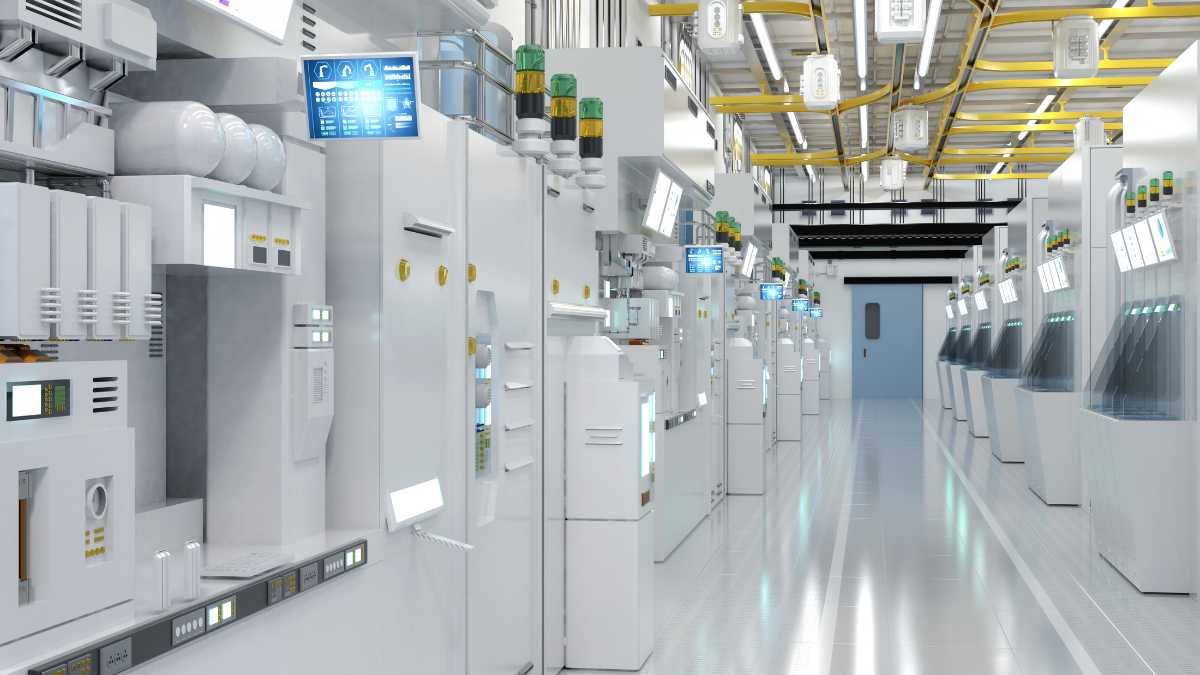
There is a Dutch company called ASML, and it makes the machines that make the most advanced chips in the world.
There is no second company, not even a close second; it’s only ASML.
Each machine, or we can say EUV (extreme ultraviolet lithography) machine, costs around $150 million.
The supply chain behind each one spans roughly 5,000 suppliers across multiple countries.
It took ASML about 30 years to figure out how to build them reliably. If you cannot access these machines, you cannot manufacture chips below 7nm.
How This is a Structural Chokepoint for the Global Economy
As I said, the company is located in the Netherlands, backed by the Dutch and US governments.
So when the US wanted to slow China’s chip development, the most direct move was to make sure ASML’s machines did not reach Chinese fabs.
Everything else in this story flows from that single bottleneck.
A modern fighter jet uses around 3,000 semiconductor chips.
Missile guidance, AI surveillance infrastructure, satellite communications, financial clearing systems, and power grid management all run on chips.
When a government looks at semiconductor supply, it evaluates whether its military and economy are built on someone else’s manufacturing decisions.
So the US figured this out formally around 2018 with the first Huawei restrictions.
The US-China Chip War: What the Export Controls Did
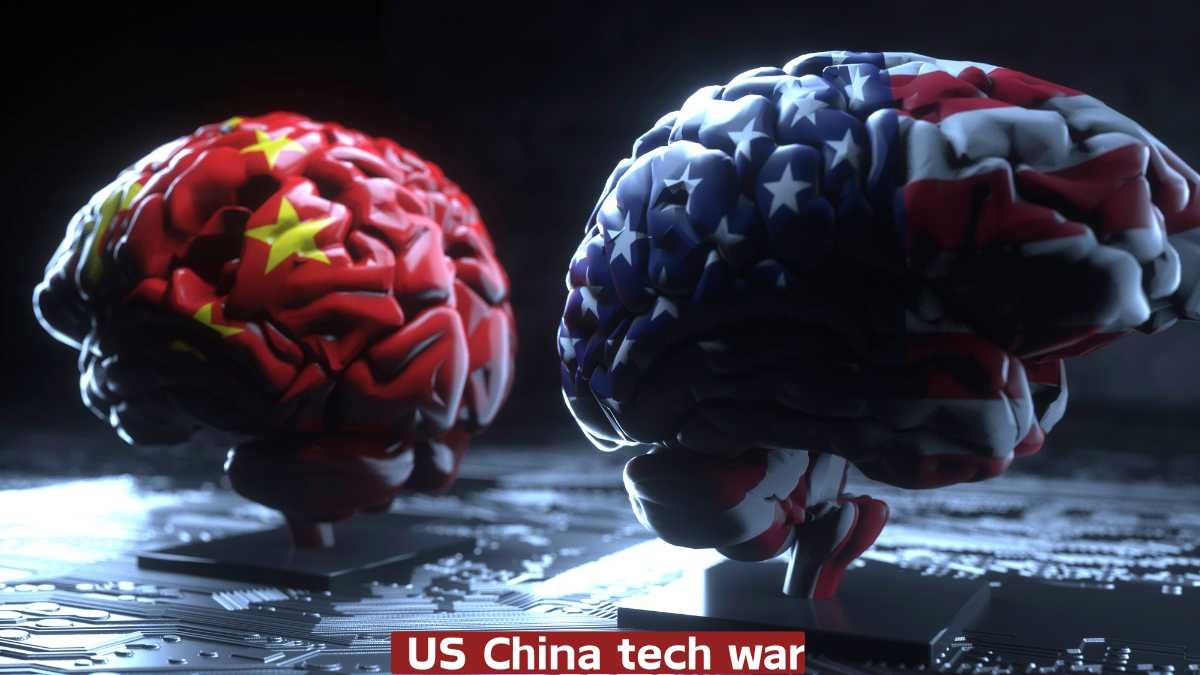
In October 2022, the Bureau of Industry and Security introduced sweeping export control rules that blocked US companies from selling advanced chips and chip-making equipment to China without a license.
NVIDIA’s A100 and H100, the hardware that trains large AI models, were effectively cut off.
The rules also restricted US citizens and permanent residents from working in China’s advanced chip sector.
A year later, in October 2023, those rules were expanded again.
The United States updated controls and closed loopholes that had let slightly less powerful chips through.
Georgetown’s CSET tracked how over 100 specific chips were affected by the new parameters.
The US Government Accountability Office reviewed implementation and confirmed BIS substantially expanded entity list designations and enforcement infrastructure.
Did the controls work?

Yes, it did, but partially, and in a complicated way
Because, later in August 2023, Huawei released the Mate 60 Pro.
Analysts tore it apart and found a Kirin 9000 chip made by SMIC at roughly 7nm. And that caught a lot of people off guard, including people who follow this closely.
China had achieved something most analysts thought was years away, and they did it using older DUV lithography through a technique called multi-patterning.
The process was slower, more expensive, and harder to scale, but it worked for China.
So the controls made China’s chip development harder and more costly, but it could not stop it.
And another thing: the restrictions may have accelerated Chinese domestic investment in ways that would not have happened otherwise.
Before 2018, China was buying advanced chips from the US and Taiwan and had limited incentive to build domestic alternatives.
From this, a quote comes to my mind: Necessity is the Mother of Invention.
However, China’s Big Fund raised $47.5 billion in its third phase in May 2024 alone, according to Reuters, on top of roughly $50 billion from phases one and two.
The US response was the CHIPS and Science Act, signed in 2022, allocating $52.7 billion to boost domestic manufacturing.
The US got TSMC Arizona, Intel Ohio, and Samsung Texas.
The Commerce Department tracks progress on these.
How China Is Responding Now
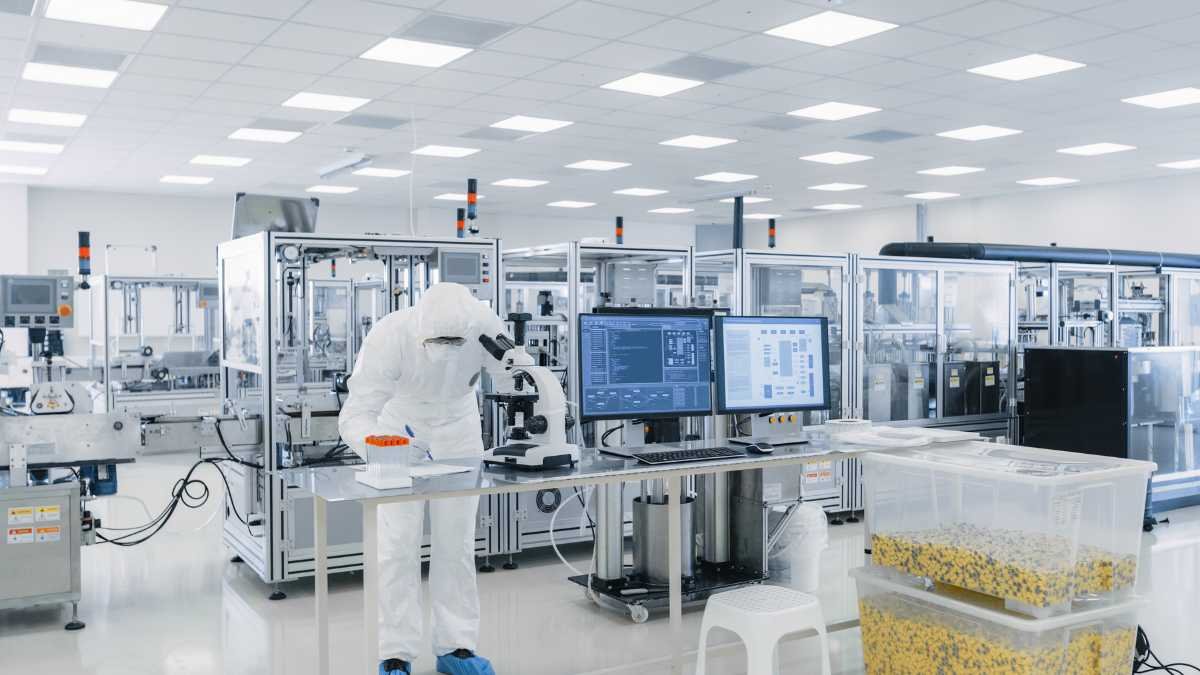
China is now following two tracks simultaneously, one is Investment and the other is diplomacy.
The investment track is about building what China cannot currently import; it’s investing money into SMIC, domestic equipment makers, and materials suppliers.
The diplomatic track is about deepening ties with countries that have not joined the US export control coalition, so that China maintains access to whatever technology it still can.
Japan joined the US controls in March 2023, and it restricted 23 categories of advanced semiconductor manufacturing equipment.
The Netherlands followed with restrictions on ASML’s older DUV machines in January 2024.
That coalition now covers most of the critical equipment exporters. And China has also responded with stockpiling and domestic alternatives.
Currently, China imports around $350 billion in semiconductors annually. And most analysis from organizations like CSIS puts China 5 to 10 years behind the leading edge, even with current investment levels.
One thing I note: China’s original domestic self-sufficiency targets for semiconductors by 2025 were not met. That should make anyone cautious about projections in either direction.
By the way, China holds a very strong position when it comes to rare earth minerals, and it is now a superpower. You can read my blog on that topic.
Taiwan’s Silicon Shield: What It Means

TSMC produces around 90% of the world’s most advanced chips, the sub-5nm nodes used in AI systems, military hardware, and flagship consumer devices.
Its share of the global contract chip manufacturing market is around 60%, so we are too dependent on it.
The silicon shield theory says this concentration protects Taiwan. Any action that damaged TSMC’s fabs would create economic disruption across the US, Europe, and China itself.
And the economic pain would be mutual and enormous.
I think the theory is mostly right but incomplete in one specific way.
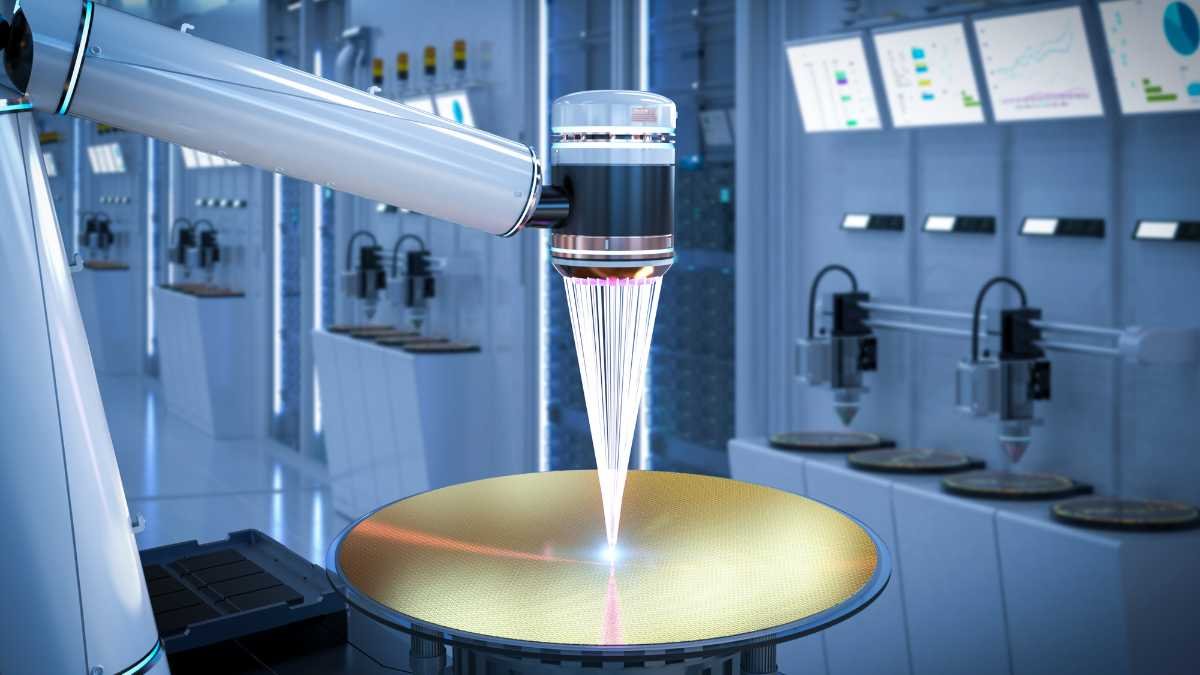
Here is what most analyses of the silicon shield did not talk about: in May 2024, Bloomberg reported that ASML has a remote kill switch built into its EUV machines at TSMC’s Taiwan fabs, which allows the equipment to be disabled remotely if an invasion occurred.
Taiwan’s own technology minister confirmed this capability publicly.
The Netherlands had run simulations on a potential invasion specifically to assess these risks. ASML reassured the Dutch government that it could remotely disable the machines.
So the silicon shield is an active dimension too. Even in the future, if an invasion happens, and someone captures the fabs intact, it would not mean much if the machines powering them can be disabled from the Netherlands before anyone reaches them.
That complicates any scenario where seizing TSMC’s production capacity is the objective.
So geopolitically, it’s like the shield for Taiwan, because if Taiwan gets hurt, the whole world will get hurt.
The Nations Rebuilding Their Position
South Korea
Samsung and SK Hynix dominate global memory production (DRAM and NAND flash).
Samsung also competes as a foundry, though it has struggled with yield rates at the most advanced nodes.
Korea’s chip exposure is different from Taiwan’s but still significant, and it operates inside its own complex regional security situation.
Japan
Japan was the global semiconductor leader in the 1980s, lost most of that ground to Korea and Taiwan by the 2000s, and is now rebuilding deliberately.
The TSMC Kumamoto fab received $3.5 billion in Japanese government subsidies, with a second plant planned.
But what often gets overlooked is Japan’s upstream position: companies like JSR, Shin-Etsu, and Sumitomo Chemical hold near-monopoly positions in the specialty chemicals and photoresists that go into chip manufacturing globally.
Japan has leverage at a layer of the supply chain that gets almost no attention.
The EU
The European Chips Act (2023) targets €43 billion in investment and 20% of global chip output by 2030.
Both numbers look optimistic from where things stand now.
TSMC’s Dresden fab in Germany is the centerpiece of this effort, focused on mature nodes for Europe’s automotive and industrial sectors.
India
Tata Electronics is building a fab in Gujarat with Taiwan’s Powerchip as a partner, targeting 28nm and above.
It is not competing at the leading edge, but still, it is reducing India’s import dependency at the nodes where most of India’s actual chip needs sit.
The Countries That Just Get Left Behind
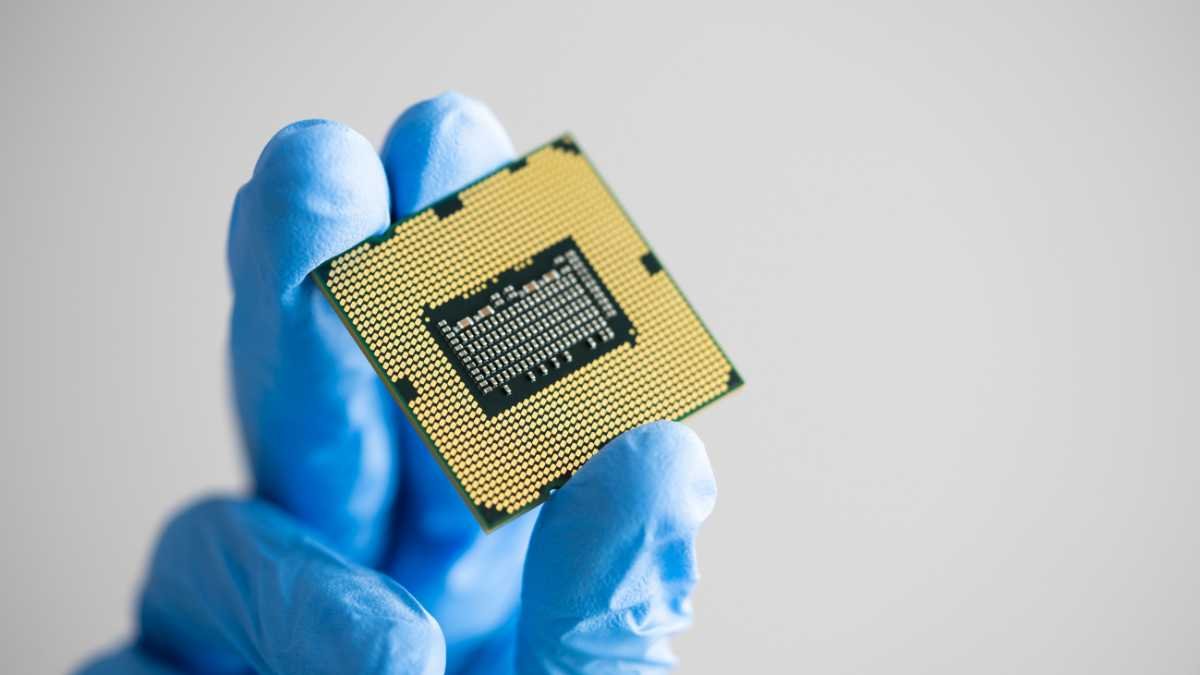
Most of the world has no domestic chip production at all, for example, Southeast Asia, the Middle East, Latin America, and Africa.
For these countries, semiconductor geopolitics is not a competition to enter; this is just a dependency to manage.
The 2020 to 2022 chip shortage is the clearest example of what that means in practice.
AlixPartners estimated the global automotive industry lost $210 billion in revenue in 2021 alone from that shortage, with 7.7 million vehicles unproduced.
And that happened without any geopolitical crisis, only a demand surge and some regional production disruptions.
Now, we can imagine a disruption around Taiwan would be a different order of magnitude.
Countries without domestic fab capacity and without bilateral chip supply agreements have essentially no buffer.
Where Semiconductor Geopolitics Is Heading
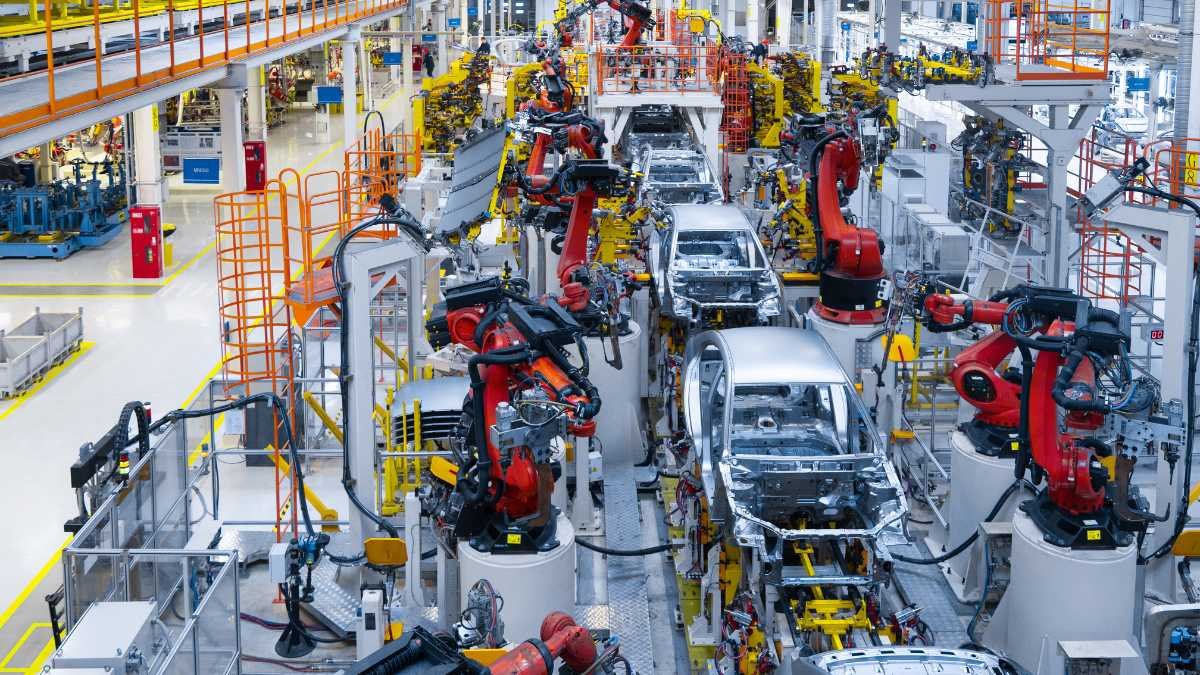
Now that the unified global supply chain is being replaced, we saw the era where US companies designed chips, TSMC manufactured them, and Chinese factories assembled the final products.
And that system was okay and worked well for about two decades, but it’s not the model anymore.
A 2024 SIA/BCG resilience report projects US fab capacity tripling by 2032, growing the US share of global production from 10% to 14%. That is real progress and also a clear signal of how far from self-sufficiency the US remains.
What is coming is overlapping parallel ecosystems; the US cluster runs on domestic TSMC and Intel fabs, with restricted access for adversaries.
The China cluster runs on SMIC, domestic equipment investment, and whatever capabilities develop without EUV access.
My Opinion on the Future of the Race
China hitting 3nm domestically this decade is possible, but it’s uncertain without ASML access.
The US cluster reaching volume production at the leading edge depends on TSMC Arizona hitting yield rates that have so far trailed Taiwan.
And these things are engineering problems, not policy problems, and engineering at this scale has surprised analysts in both directions.
What I think is actually underestimated is how much this situation rewards patience over speed.
- The US has the design advantage and the alliance structure.
- China has the capital and the urgency.
- Taiwan has an irreplaceable manufacturing depth.
None of those assets will transfer quickly, and I personally believe the winner of this story probably won’t throw a dramatic move, but it will win by compounding incremental advantages over twenty years while the other side makes expensive errors.
Where This Leaves Us

Semiconductor geopolitics is now a category shaping foreign policy, trade law, investment decisions, and military strategy at the same time, which wasn’t the same a decade ago.
Taiwan is the most consequential piece of geography in this story because the rest of the world is dependent on it.
Taiwanese have silicon shields, kill switches, and redundancy being built in Arizona, Japan, and Germany.
Not the most important thing is to watch which country achieves volume manufacturing at the leading edge outside of Taiwan.
And that answer will tell us more about where this is heading than any policy announcement or trade restriction.
Some Questions and Their Answers
What actually makes a chip ‘advanced’?
The process node, which is measured in nanometers, makes it advanced.
Smaller means more transistors per chip, which means more computing power and less energy use. An advanced chip today is 3nm and below.
Above 28nm is called mature or legacy. And legacy chips still matter for cars, industrial machines, and basic appliances.
But they are less strategically sensitive because more countries and companies can produce them.
Why does building a fab take so long, even with money?
Three to five years, $10 to $20 billion, and that is before yield problems.
Besides this, a company that wants to build the system will also need thousands of engineers who understand the specific process, a supply chain of hundreds of specialty chemicals and gases, and years of running the line to improve output quality.
Right now, TSMC has 37 years of that embedded knowledge.
Is the US actually winning this?
Winning is the wrong frame for something with a twenty-year timeline. But yes, the US has slowed China’s access to leading-edge chips, and that matters for China’s AI development and military technology timelines.
But the Huawei Mate 60 Pro showed that restrictions slow things down without stopping them.
So, the more accurate picture: both sides are restructuring for a long competition.
Does TSMC building fabs in the US mean Taiwan becomes less important?
Not for a long time! TSMC Arizona is running at 4nm. By the time that fab moves to 2nm, the Taiwan plants will be at 1nm or below.
So the most advanced production will stay in Taiwan for at least the next decade. The Arizona and Japan expansions are about supply chain resilience, and won’t replace Taiwan’s role.

Abraham is the founder and sole writer of Geopolitics Decoded. Based in New Delhi, India, he has been researching and analyzing international affairs since 2019, with a focus on great-power competition, European security, energy geopolitics, and global diplomacy. He is currently pursuing independent coursework in global diplomacy through SOAS University of London. His fact-based, deeply contextual analysis has earned millions of interactions across social media platforms, including Threads and Instagram. Every article on this site is independently researched, written, and verified by Abraham personally. Read Abraham’s full author bio