I have been following NATO news these days, especially seeing what is happening between the US and Iran, and also the Russian drones hit Romanian apartment buildings, so NATO Article 5 is being discussed a lot.
I noticed on Reddit and Social Media that Article 5 is like most people assume it’s like a military panic button, which it is not.
Article 5 of the North Atlantic Treaty is NATO’s collective defense clause. And it says an armed attack against any member is treated as an attack against all, and there are a total of 32 countries that are part of this group.
Complete NATO article 5 text is available on NATO’s official site, but for a summary, it says that each ally will assist the attacked country by taking “such action as it deems necessary, including the use of armed force.”
What the Article 5 Says (and How it Works/Activate)

Article 5 has been invoked once despite decades of crises, and not even during the Cold War standoffs, and now Russian drones are crashing into NATO territory (Romania).
So, why? That was because there were three scenarios behind:
Geographic Restriction:
Article 6 of the same treaty defines where Article 5 applies:
- Attacks on member territories in Europe
- North America
- The Mediterranean Sea
- The North Atlantic area north of the Tropic of Cancer.
When Argentina invaded the Falkland Islands in April 1982, the UK could not invoke Article 5.
And that is because the Falklands sit in the South Atlantic, well south of the Tropic of Cancer, outside Article 6’s coverage entirely. And Britain fought that war alone; NATO was under no legal obligation to respond, and it didn’t.
Activating Article 5 Requires Unanimous Consensus from Every Member
That requirement is deliberate because it prevents the alliance from being pulled into a conflict because of one country’s choices or miscalculations.
And even once triggered, what counts as “necessary action” is left to each government.
A member can respond with:
- Weapons
- Sanctions
- Intelligence sharing
- Nothing more than a statement of solidarity, etc.
It Operates Within a Legal Framework
Any Article 5 measures must be reported immediately to the UN Security Council and must stop once the Security Council has taken steps to restore peace.
So even in the most extreme scenario, the response operates within an international legal framework, and it’s not a free-for-all.
The Brennan Center has a solid breakdown of how that legal chain works in practice.
The Last and Only Time When Article 5 Was Triggered
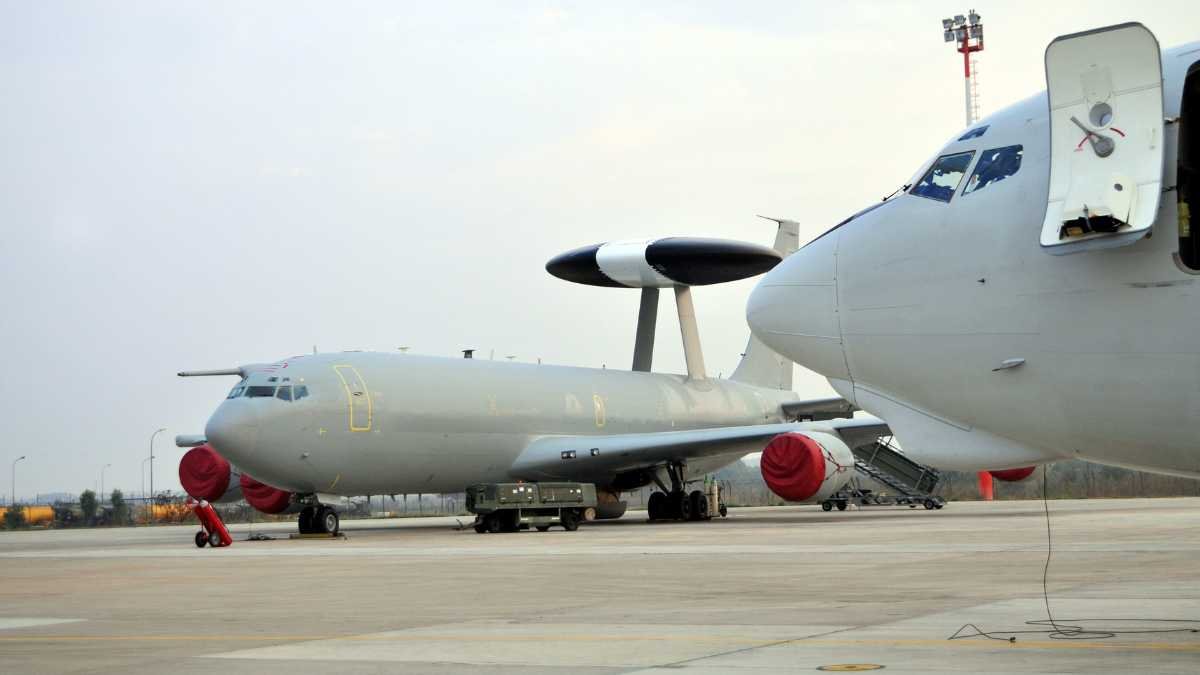
What is interesting about the 9/11 invocation is that the US didn’t push for it.
NATO’s governing body, the North Atlantic Council, invoked Article 5 at its own initiative on September 12, 2001, even as several members, including Germany, Belgium, Norway, and the Netherlands, had reservations.
On October 2, 2001, after a US briefing confirmed the attacks were directed from abroad, Article 5 was formally activated.
Two operations followed:
- Operation Eagle Assist, which deployed NATO surveillance aircraft to patrol North American airspace.
- Operation Active Endeavour is a naval deployment in the Mediterranean Sea.
Both were significant symbolically, but they were limited in practice.
The US was actually skeptical of NATO’s military capacity at the time, and chose not to seek broader Article 5 support for the invasion of Afghanistan; the alliance also didn’t participate in that initial invasion.
NATO later took command of the International Security Assistance Force (ISAF) in Afghanistan in 2003, but that was under a separate UN mandate, not through Article 5.
Over the following 20 years, more than 1,000 soldiers from allied nations lost their lives in Afghanistan alongside American forces.
This was the real-world weight of what the 2001 invocation set in motion, even though the formal legal link from Article 5 to the ISAF mission was indirect.
An important lesson: the declaration of Article 5 and the actual military response that follows can look very different from each other.
Russia’s Drones Started Landing Inside Romania in 2026, Will It Trigger Article 5

Romania shares a 650-kilometer land border with Ukraine, and since 2022, as ABC News documented in April 2026, Romania has recorded 25 airspace violations, found munition fragments 47 times, and scrambled fighter jets on 53 separate occasions.
Then on May 28, 2026, a Russian drone targeting Ukraine’s Odesa region crashed into a residential apartment building in Galati, Romania, which injured two people.
Romania expelled the Russian consul from Constanta and closed the consulate.
NATO condemned Russia’s “recklessness“ and promised to strengthen defenses, but nobody invoked Article 5.
But why not?
The most significant reason is contested intent,
Russia maintains these incidents are stray from strikes on Ukraine, and they are not deliberate attacks on NATO.
So, without clear evidence of intentional targeting, the legal bar for what counts as an “armed attack“ under Article 5 is unclear.
A single stray drone, even one that injured people in an apartment, is politically very different from a sustained military assault on a member state.
In September 2025, Russian drones also entered Polish airspace, which is a prominent part of NATO, and NATO launched Operation Eastern Sentry to bolster air defenses.
Poland used Article 4 (the consultation clause) rather than Article 5. And the alliance’s message was clear and consistent: we are reinforcing, watching, but not crossing into formal collective defense over these incidents.
A Missile Hit Turkey, and Article 5 Wasn’t Invoked

On February 28, 2026, the US and Israel launched Operation Epic Fury, striking Iran, in which Supreme Leader Ali Khamenei was targeted.
European NATO allies were not consulted beforehand, and Iran also retaliated broadly across the Middle East.
On March 4, 2026, an Iranian ballistic missile entered Turkish airspace and was intercepted by NATO air defense systems over southern Turkey’s Hatay province. Turkey is a NATO member. Debris fell on Turkish soil. That sounds exactly like the scenario Article 5 was designed for.
And yet, NATO Secretary-General Mark Rutte told Reuters the following day: “Nobody’s talking about Article 5”.
US Defense Secretary Pete Hegseth said there was “no sense“ it would trigger Article 5.
The Iranian military initially denied even firing toward Turkey and called it a friendly neighbor.
But ambiguity, combined with the fact that the missile was intercepted before causing casualties, and the reality that the US had started this conflict without consulting its allies, created the political conditions for keeping Article 5 off the table.
Trump then called on NATO to join a Strait of Hormuz blockade, but European allies, including the UK, Germany, France, and Italy, rejected it flatly.
British Prime Minister Keir Starmer said clearly:
We’re not getting dragged into the war.
So the European position was that this was a US war of choice, not a defensive response to an attack on a NATO member, so Article 5 simply wasn’t the right tool.
That’s a coherent legal reading, because Article 5 is a defensive mechanism; no nation can invoke collective defense when its own side initiated the conflict.
How Russia Reads Article 5
NATO was built in 1949 to deter Soviet aggression, and the USSR is gone, but Russia still views the alliance as an existential constraint.
For decades, Russia respected the deterrent, but not necessarily because it feared the treaty text.
As a Russian strategist reportedly said, cited in a 2025 Institut Montaigne analysis:
“It is not NATO that we fear, it is the US bases in Europe.“ So the deterrent was rooted in physical US presence, not treaty language.
What may be changing is Russia’s confidence that Article 5 will actually be enforced.
German intelligence chief Bruno Kahl warned in mid-2025 that:
There are people in Moscow who no longer believe that NATO’s Article 5 works. And they would like to test it.
Denmark’s defense minister made a similar assessment in 2024, saying Russia could actively test Article 5 within three to five years.

The Belfer Center published an analysis in September 2025 that said:
Article 5’s deterrent value “rests not on the text itself but on whether allies, particularly the United States, are seen as willing and able to act if required.“
With US commitments to European defense looking conditional through 2025 and 2026, that credibility question is now also getting harder to answer with confidence.
Right now, Russia’s approach is to probe the gray zone; drone incursions into Romania, Poland, and Estonia are not accidents.
They’re calibrated pressure, because there is a theory that NATO will keep choosing de-escalation over confrontation, and over time, that chips away at Article 5’s credibility without ever formally testing it.
Conclusion
NATO Article 5 is a collective defense commitment with legal limits: geographic boundaries, a consensus requirement, and flexible response obligations that leave room for everything from weapons shipments to diplomatic statements.
It has been invoked only one time, and that was September 12, 2001, after 9/11, and even that invocation led to more limited direct action than the dramatic language implied.
Right now in 2026, the article is being stress-tested in real time, Russian drones have hit NATO soil in Romania, and Iranian missiles also grazed Turkey’s airspace.
The US started a Middle East war without telling its allies and then demanded their help.
Their response to each has been deliberate, cautious, and mostly below the Article 5 threshold.
So, Article 5 is still the backbone of NATO, but its credibility depends on political will more than the treaty text.
FAQs
If a NATO country declares war and is attacked in response, does it have the right to invoke Article 5?
NO, Article 5 is designed for a member who is the victim of an armed attack, not one who initiates military strikes.
European allies made this distinction very explicitly and rejected US pressure to treat Iranian retaliation as an Article 5 situation.
If Russia attacked Estonia or Latvia tomorrow, would Article 5 definitely kick in?
Firstly, Baltic states fall within Article 5’s geographic coverage, and NATO has troops stationed there, but “definitely“ is the wrong word.
To trigger Article 5, it still requires a unanimous consensus among 32 countries.
Russia knows this, which is why analysts believe any Russian move against the Baltics would involve enough ambiguity to complicate that consensus, similar to how Russia operated in Donbas in 2014.
It’s designed to make the “armed attack“ classification hard to agree on.
Can a cyberattack trigger Article 5?
NATO formally said yes in 2016: a cyberattack can, in principle, qualify as an armed attack under Article 5.
But attribution is hard, and reaching a political consensus on whether a cyber incident crosses the threshold is even harder.
As of 2026, no cyberattack has ever resulted in Article 5 invocation, and the bar remains high. It’s more of an acknowledgment that it’s theoretically possible than a practical guarantee.
Why didn’t the UK invoke Article 5 during the Falklands War in 1982?
It didn’t because it couldn’t, the Falkland Islands are in the South Atlantic Ocean, well south of the Tropic of Cancer.
Article 6 of the North Atlantic Treaty limits Article 5’s coverage to territories north of that line, so the Falklands simply aren’t covered.
Britain fought Argentina alone for 74 days and won, but NATO had no legal obligation to help and didn’t.
So, it was a geographic limitation that still applied, and it still applies today to other UK and French overseas territories in the South Atlantic and elsewhere.
Is there any formal threshold that defines how many drone hits on NATO soil would trigger Article 5?
NO! The treaty doesn’t set a numerical threshold; it comes down to severity, proven intent, and the political will of all 32 members to agree that what happened constitutes an “armed attack“ rather than an incident or an accident.
What’s happening with Romania right now sits in a gray zone that NATO is deliberately not escalating.
If Russia were to deliberately strike a Romanian city with clear intent, Article 5 would almost certainly be invoked.

Abraham is the founder and sole writer of Geopolitics Decoded. Based in New Delhi, India, he has been researching and analyzing international affairs since 2019, with a focus on great-power competition, European security, energy geopolitics, and global diplomacy. He is currently pursuing independent coursework in global diplomacy through SOAS University of London. His fact-based, deeply contextual analysis has earned millions of interactions across social media platforms, including Threads and Instagram. Every article on this site is independently researched, written, and verified by Abraham personally. Read Abraham’s full author bio