To understand how the global energy trade looks outside official channels, you have to understand the dark fleet Northern Sea Route.
After the G7 put a $60 price cap on Russian oil in December 2022, Russia didn’t stop selling. Instead of that, it put together the dark fleet.
So what is Russia’s dark fleet?
Russia’s dark fleet includes around 600 to 700 older tankers that are running with disabled tracking, questionable insurance, and ownership structures built to be difficult to trace.
And to build this system, Russia has spent around $10 billion assembling it since 2022.
A growing part of that fleet now moves through the Northern Sea Route.
In December 2025, the Bellona Foundation reported that 100 sanctioned vessels used the NSR that year alone.
In 2024, the number of vessels was 13, but now, one-third of all Arctic shipping involves sanctioned ships.
Russia’s Arctic Corridor (and Why It’s Not What People Think)
The NSR runs about 5,600 kilometers along Russia’s Arctic coast, from the Novaya Zemlya archipelago in the west to the Bering Strait in the east.
Rotterdam to Shanghai via Suez is about 20,900 kilometers, while from the NSR, it’s around 14,000. So a 33 percent shorter trip on paper, less fuel and time.
However, Russia claims regulatory control over NSR, under domestic law and a specific clause in international maritime law that gives Arctic coastal states environmental authority over ice-covered waters. So it’s not a free international waterway.
Every ship that wants to use this route needs a permit from Russia’s Northern Sea Route Administration, which sits under Rosatom, the state nuclear corporation.
Russia also runs the world’s largest nuclear icebreaker fleet, currently around seven active vessels.
No other country has anything close to that capacity. So even if China or India wants to use the route, they still need Russian icebreakers to safely get through most of it.
What the Dark Fleet Is Moving Up There
Most of the Russian shadow fleet aren’t running through the NSR; they still use Suez or the Cape of Good Hope. So the Arctic-specific activity is more concentrated.
However, the first driver is Novatek’s Yamal LNG facility on the Yamal Peninsula.
It produces about 16.5 million tonnes of LNG per year, and most of its routes east to Asia go through the Arctic.
When sanctions cut off the specialized ice-class tankers originally built for this, shadow vessels stepped in.
Arctic LNG 2’s Tanker Problem
It was designed to produce around 20 million tonnes of LNG per year, but sanctions created a major problem.
G7 countries targeted eight specialized icebreaking LNG carriers built specifically for the project.
Three were completed but stranded in South Korean shipyards, while five more were stuck at a Russian yard.
Then in August 2024, Russia loaded the first Arctic LNG 2 cargo onto a shadow tanker called the Pioneer.
By 2025, 15 shadow LNG tankers had delivered over a million tonnes to China’s Beihai terminal, according to Bloomberg shipping data.
How about the Insurance?
Major Western P&I clubs, which are the mutual pools that cover tanker accidents, stopped insuring shadow fleet ships after sanctions on Russia.
What replaced them is Russian state insurance and a few smaller alternatives.
If a shadow tanker has a serious incident in the Arctic, the financial backing to actually deal with it is essentially not there.
According to Bellona Foundation, around a hundred vessels used the Northern Sea Route in 2025, and that number was 13 in 2024. One third of all Arctic shipping now involves sanctioned ships.
How the NSR Compares to Hormuz and Suez
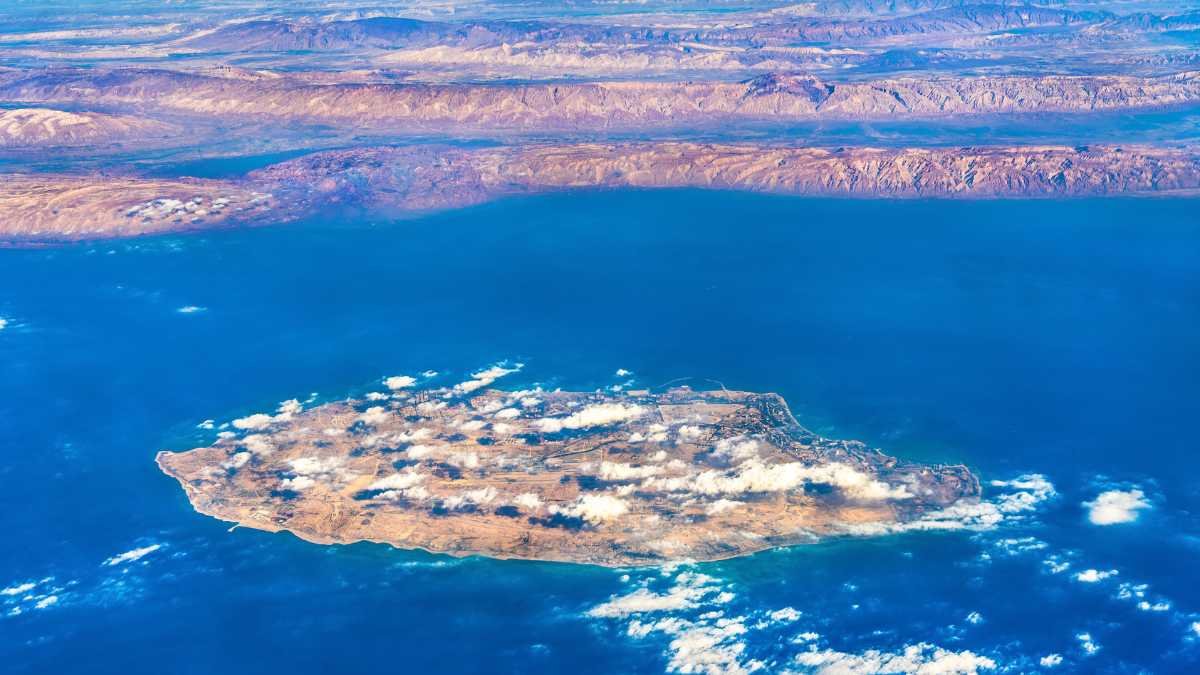
Right now, after the blockade of the Strait of Hormuz, some people compare the NSR to a rising competitor to the Strait of Hormuz, but it is not.
In 2025, the Strait of Hormuz moved about 20 million barrels of oil per day based on EIA and IEA data, which is about 20 percent of global petroleum liquids and about 34 percent of global crude oil trade.
While the Northern Sea Route’s record year was 2025, at 37.02 million tonnes of total cargo, 2.3% decline compared to the previous year. And only
And only about 3.2 million tonnes of that were international transit.
2025 Maritime Shipping Data Comparison
Metric Northern Sea Route (NSR) Vs. Strait of Hormuz
| Metric | Northern Sea Route (NSR) | Strait of Hormuz |
| Total Annual Volume | 37.02 million metric tonnes | 20.1 million barrels per day (1 billion tonnes/year equivalent) |
| International Transit Only | 3.2 million metric tonnes | Not applicable (almost all traffic is international trade) |
| Global Trade Share | 0.5% of global seaborne trade | 20% of global petroleum liquids consumption |
| Primary Commodities | LNG (47%) and Crude Oil (23%) | Crude oil, refined petroleum products, and LNG |
So, the Strait of Hormuz is way more important for the world; any disruption to Hormuz would hit 20 percent of global oil right away, and we can see it now after Iran blocked it.
While a disruption to the NSR today will mostly affect Russia’s own Arctic exports, it will also affect whoever is buying them.
But if Russia gets to 60 or 70 million tonnes by 2030, those stakes will change, especially for Japan, South Korea, and China.
How Russia Earns Profit From NSR?
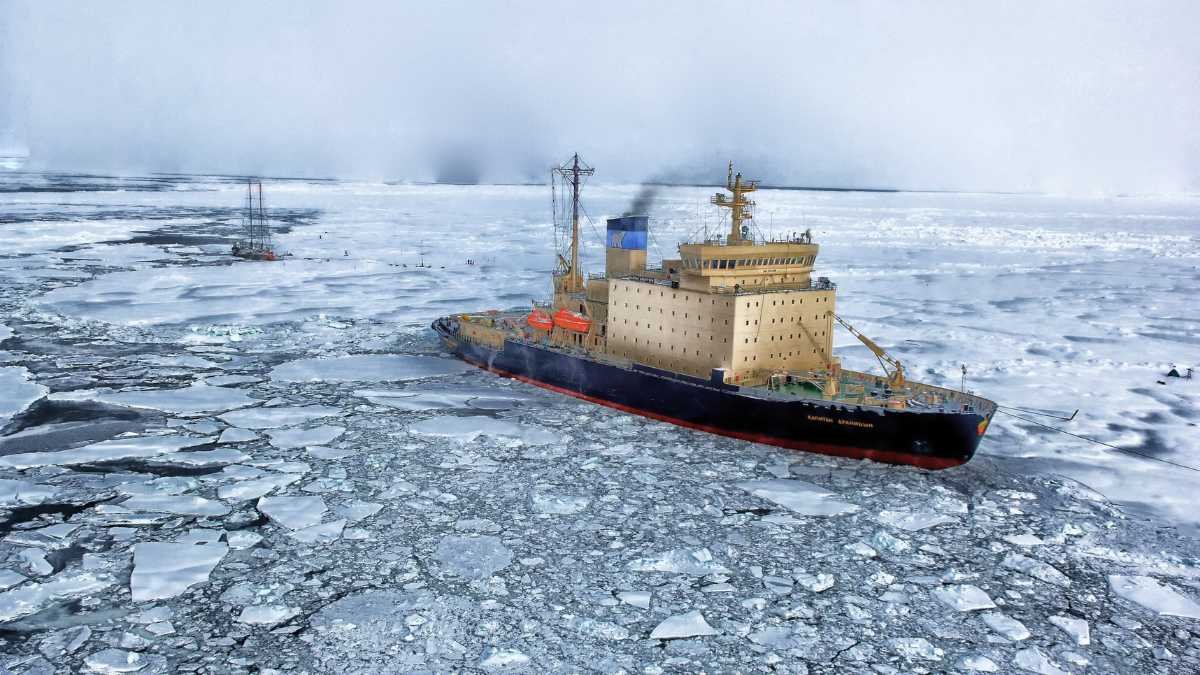
Russia earns from the NSR in three ways:
- Rosatom collects transit fees and icebreaker charges from foreign vessels.
- State energy companies like Novatek and Rosneft sell Arctic oil and LNG east to Asian buyers.
- Port spending around Sabetta, Dikson, and Pevek creates economic activity in regions that have basically nothing else.
China is also building its stake in the route; the NewNew Shipping Line started NSR container services in 2023 using purpose-built low-Arctic vessels.
China’s state-owned shipping company COSCO has been expanding Arctic operations too.
And in its 2018 Arctic Policy white paper, China officially called itself a “near-Arctic state.” Although geographically, this statement makes no sense.
But yes, strategically it makes complete sense, because China’s energy imports run heavily through the Strait of Malacca and Beijing talks openly about that being a vulnerability.
NSR Seasonal Window
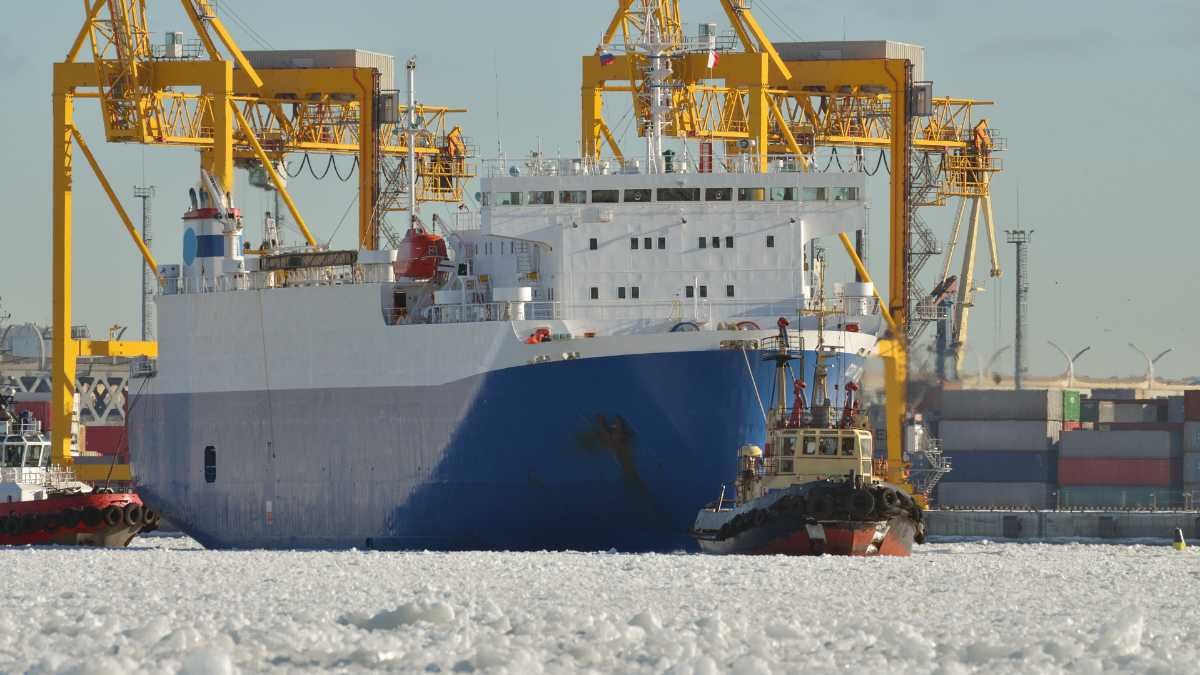
Without icebreakers, the NSR is navigable maybe two to four months a year, mainly from July to October.
But with nuclear icebreaker support, Russia extends the window, and also the conditions shift a lot year to year.
The Centre for High North Logistics found the 2025 season ran about four and a half months and got cut short by poor ice conditions.
The “Arctic warming will open the route” narrative gets ahead of itself. Fully ice-free conditions on the NSR aren’t projected until somewhere in the 2035 to 2050 range, and even then, unexpected ice events will still be a factor.
So, for anyone who tries to run a scheduled service, it will be a real problem. Russia’s shadow fleet operators care less about schedule reliability.
Arctic Is Not Ready for a Major Spill
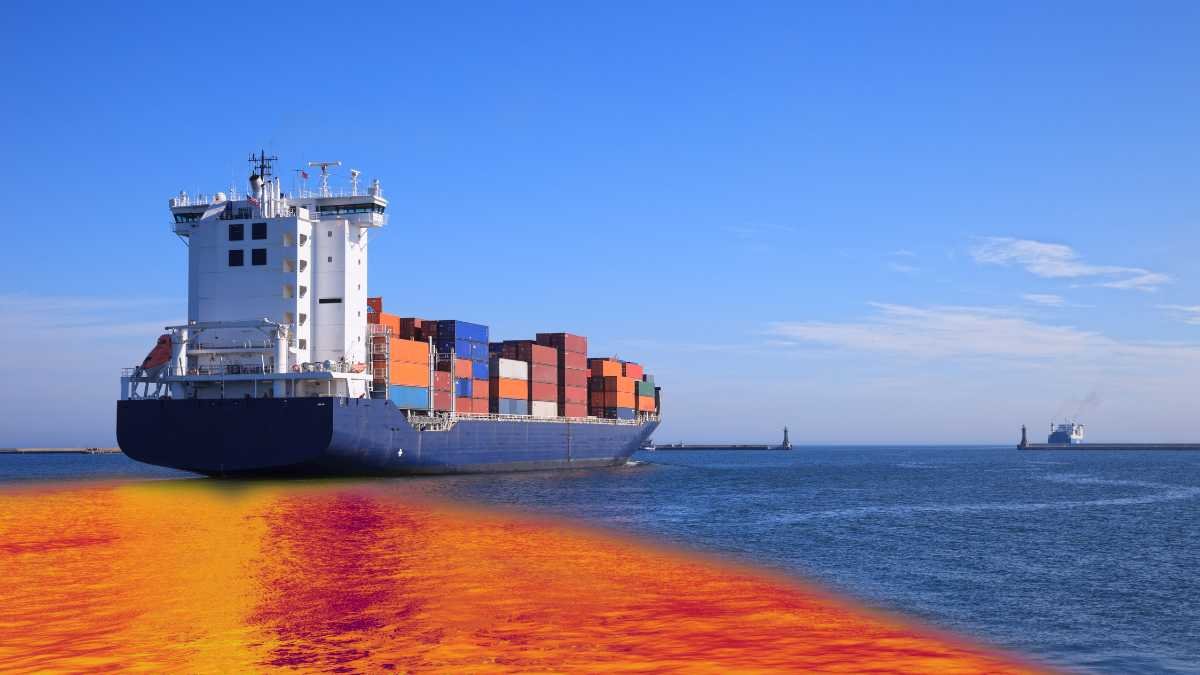
The IMO ban on heavy fuel oil in Arctic waters came into force in July 2024, with exemptions until July 2029 for certain flag states, and most dark fleet tankers run on heavy fuel oil.
Most also fly flags that qualify for the exemption, especially the Russian. So the ban doesn’t yet apply to most of the vessels creating the risk.
Heavy fuel oil doesn’t evaporate in cold water the way lighter fuels do. So the major spill along the NSR would be nearly impossible to clean up, and the cleanup infrastructure barely exists along most of the 5,600-kilometer route.
Russia’s spill response is clustered near its main ports, not spread across the full corridor.
Old Ships, New Routes
Besides, tankers spill heavy fuel oil; another problem is who is operating some of these ships.
The Bellona Foundation found that half the shadow oil tankers using the NSR in 2025 were making the trip for the first time.
Therefore, they lacked proper ice ratings, and some operated under insurance that couldn’t cover a serious incident.
All these things create a worrying combination; the Arctic has limited capacity to respond to a major spill, while some of the vessels using the route are older, less experienced in Arctic conditions, or backed by weaker insurance arrangements.
Future of Northern Sea Route
Russia has a 2030 NSR target, but things are now slowing them down; some of those things are as follows:
- Western sanctions have blocked specialized LNG equipment needed to finish Arctic LNG 2 properly.
- Ship financing restrictions have made legitimate fleet expansion hard.
- Export controls on Arctic drilling technology have slowed new field development.
So what’s Russia gonna do? China!
Russian-Chinese container traffic along the Northern Sea Route has continued to grow since 2024.
After container voyages doubled between 2023 and 2024, Rosatom said 17 voyages had already been completed by October 2025, moving a record 280,000 tonnes of cargo. It’s almost 60% more than the total volume transported during the entire previous year, and it’s growing more.
But Chinese LNG module manufacturing is not at the point where it can fully replace Western technology for Arctic-scale operations,
Scenario by 2030: somewhere between 50 and 70 million tonnes. Still mostly Russian cargo, with China more visible in ports and shipping logistics.
Conclusion
The dark fleet Northern Sea Route had a geography, but Russia is under sanctions, so it’s hard to police, and it’s controlled by a country that built the only infrastructure capable of operating there.
This route has seasonal limits too, and if we compare it to Hormuz, it is not even closer yet. However, it has jumped from 13 sanctioned vessels to 100 in a single year. Let’s see what happens at the end of 2026.
Frequently Asked Questions
If Russia controls the icebreakers, can it just deny China access to the NSR?
Yes, it can. Russia issues the permits and controls icebreaker escorts. In practice, Russia needs China as the primary buyer for its Arctic energy exports, so cutting off Chinese vessels would hurt Russia more than China.
But the dependency runs both ways, so there is a balance as both sides invest more in the route.
How does any of this connect to the energy prices people actually pay?
Mostly, they are indirect; the NSR keeps Russian oil and gas moving to market at volume, which provides some downward pressure on global energy prices.
If the route faces serious disruption, that pressure will disappear.
And the more direct impact lands will be on the northeast Asian LNG markets, Japan and South Korea specifically, which will then ripple into global pricing.
Also read: Europe LNG supply Chain
Why can’t Western countries declare the NSR an international waterway and ignore Russia’s permits?
Some countries dispute Russia’s legal claim, and the argument has standing under international law.
But the legal case cannot override the operational reality. So, no one else has nuclear icebreakers capable of safely running the route.

Abraham is the founder and sole writer of Geopolitics Decoded. Based in New Delhi, India, he has been researching and analyzing international affairs since 2019, with a focus on great-power competition, European security, energy geopolitics, and global diplomacy. He is currently pursuing independent coursework in global diplomacy through SOAS University of London. His fact-based, deeply contextual analysis has earned millions of interactions across social media platforms, including Threads and Instagram. Every article on this site is independently researched, written, and verified by Abraham personally. Read Abraham’s full author bio